Hexagonal Aluminum Bar Applications in CNC Machining and Precision Fastener Production

In the competitive landscape of American manufacturing, efficiency is the currency of success. For machine shops operating Swiss-style lathes, sliding headstock machines, or automatic screw machines, the geometry of the raw material is often just as critical as the alloy itself. While round stock remains the industry standard for shafts and rotational parts, the specific advantages of hexagonal profiles are transforming how shops approach high-volume component production.

At Aluminium Tubes, we recognize that material selection is the first step in cycle-time reduction. This guide explores the engineering advantages of hex bars and helps you navigate the technical trade-offs between the most common alloys used in US production today.

Why Change the Shape? Hexagonal Aluminum Bar Benefits

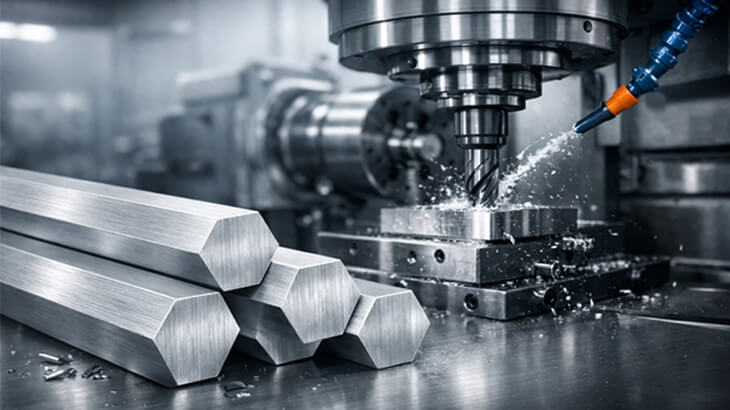
The primary argument for using hexagonal bars is “near-net shape” manufacturing. If a component requires wrench flats—such as a nut, a standoff, or a hydraulic fitting—starting with round stock necessitates milling operations to create those flat surfaces. This not only consumes machine time but also turns expensive raw material into scrap chips.

The Hexagonal aluminum bar benefits are immediate and measurable:

  • Reduced Cycle Time: By starting with a hex profile, you eliminate the need for indexing and milling flats. For high-volume runs, saving even ten seconds per part can translate to hundreds of production hours saved annually.
  • Superior Workholding: The flat surfaces of a hex bar provide a natural, stable reference for clamping. This prevents the bar from rotating under high torque, a distinct advantage over round bars that rely solely on friction for anti-rotation stability,.
  • Material Efficiency: Hex bars minimize material removal rates. Less machining means reduced tool wear on milling cutters and less waste to recycle.

The Engine of Assembly: Aluminum Hex Bar Fasteners

The most ubiquitous application for this profile is the production of aluminum hex bar fasteners. In industries ranging from automotive to marine engineering, aluminum fasteners offer a critical weight advantage over steel while maintaining sufficient strength for non-structural or semi-structural applications.

Hex bars are the ideal feedstock for screw machine products like nuts, bolts, and threaded standoffs,. Because the external hexagonal shape is pre-formed, the machining process focuses almost entirely on drilling, tapping, and parting off. This streamlined workflow is essential for keeping per-unit costs low in mass production. Furthermore, aluminum’s natural ability to form a protective oxide layer makes these fasteners excellent for environments where corrosion resistance is required alongside lightweight characteristics,.

When Performance is Critical: 7075 Hex Bar Strength

While standard alloys work well for general fasteners, aerospace and high-performance automotive applications often demand materials that rival the strength of steel. This is where 7075 hex bar strength becomes the defining factor.

Alloy 7075 is one of the highest-strength aluminum alloys available, with a tensile strength that can exceed 80,000 psi (560 MPa), nearly double that of standard structural aluminum,. It is frequently utilized in high-stress components such as:

  • Aerospace wing spars and gears.
  • High-performance race car chassis components.
  • Ordnance and military equipment.

However, this strength comes with trade-offs. 7075 is generally considered non-weldable by arc welding methods due to solidification cracking issues,. For precision fasteners in critical load-bearing scenarios where welding is not required, 7075 provides an unbeatable strength-to-weight ratio.

The Alloy Showdown: 6061 vs 6262 Hex Bar Machinability

For most machine shops, the daily choice isn’t about aerospace-grade strength, but rather ensuring the machines run smoothly without jamming. This leads to the common debate of 6061 vs 6262 hex bar machinability.

The Standard: 6061 Aluminum

6061 is the jack-of-all-trades. It offers excellent corrosion resistance and weldability, making it the go-to for structural frames and custom brackets,. However, in high-speed screw machining, 6061 can produce continuous, stringy chips that may wrap around tooling or clutter the work envelope. While it anodizes beautifully, managing chip evacuation requires careful attention to feed rates and chip breakers.

The Specialist: 6262 Aluminum

If your project involves high-volume production of threaded fittings or nuts, 6262 is often the superior choice. Designed specifically for machinability, 6262 typically contains additions of bismuth and lead. These elements act as internal chip breakers, causing the metal to shear into small, manageable chips rather than long stringers,.

  • Productivity: 6262 allows for higher cutting speeds and produces a superior surface finish directly off the tool.
  • Properties: It retains high corrosion resistance and mechanical strength comparable to 6061, making it perfect for marine fittings and camera parts,.

Choosing Your Aluminum Bar Supplier

Sourcing the right material is about more than just finding the lowest price per pound; it is about finding a partner who understands tolerances and straightness.

As your dedicated aluminum bar supplier, Aluminium Tubes recognizes that in Swiss machining, bar straightness is paramount to prevent vibration and “bar whip” at high RPMs. We understand the difference between extruded stock (standard tolerances) and cold-finished stock, which offers the tighter dimensional controls (h9 or h11 tolerances) necessary for precision collets,.

Whether you need the free-machining capabilities of 6262 for a 10,000-part run or the sheer structural might of 7075 for a prototype, we supply the certified materials that keep American spindles turning.

Conclusion

From the time-saving geometry of aluminum hex bar fasteners to the impressive capabilities of 7075 hex bar strength, the hexagonal profile is a staple of modern precision manufacturing. By selecting the correct alloy—weighing the 6061 vs 6262 hex bar machinability factors—you can optimize your production line for both speed and quality.

Aluminium Tubes is ready to assist you in selecting the perfect profile and alloy for your next project
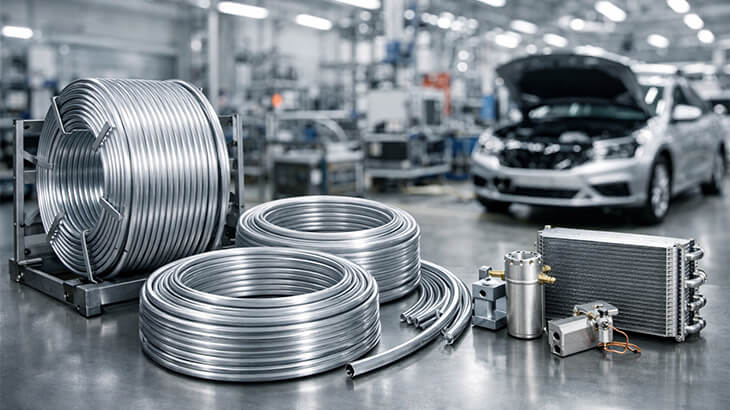
Precision Coiled Aluminum Tubing: Meeting the Demands of Automotive HVAC and Refrigeration Systems

The landscape of the American automotive industry is shifting rapidly. As manufacturers pivot toward electrification and higher efficiency standards, the components that operate behind the dashboard and under the hood are being scrutinized like never before. Among these critical components, the thermal management system has evolved from a simple comfort feature into a range-critical subsystem, particularly for Battery Electric Vehicles (BEVs).

At Aluminium Tubes, we understand that in this new era of engineering, the quality of your tubing determines the reliability of your system. As a premier aluminum tube supplier, we recognize that precision coiled tubing is no longer just a commodity—it is a vital enabler of modern automotive HVAC and refrigeration performance.

The Shift from Copper to Aluminum

For decades, copper was the standard for heat transfer. However, the modern demand for light weighting has made aluminum the material of choice. Aluminum possesses approximately one-third the density of copper, allowing for significant weight reduction in vehicle structures,.

In automotive applications, where every ounce affects fuel economy or battery range, this weight difference is substantial. Furthermore, aluminum offers a massive cost advantage. Raw material costs for aluminum are lower and more stable than copper, with overall component costs potentially reduced by 40% to 60%,.

But cost and weight are only part of the story. Aluminum alloys, particularly when engineered for high performance, offer thermal conductivity that rivals traditional materials when optimized for system design.

Critical Role in EV Heat Pumps and HVAC

The United States market is seeing a surge in demand for automatic climate control and advanced heat pump systems in electric vehicles. Unlike internal combustion engines, which generate abundant waste heat for the cabin, EVs must generate their own heat.

An efficient heat pump system is essential for preserving battery range in cold climates—potentially saving up to 11 kWh of energy during a winter drive compared to resistive heaters. This efficiency relies heavily on the automotive HVAC tubing used to transport refrigerants.

Aluminium Tubes specializes in providing refrigeration line material that meets the stringent requirements of these high-pressure, efficiency-driven systems. Our precision coils are designed to handle the complex routing and thermal demands of modern heat exchangers, ensuring that the system maintains a high coefficient of performance.

The Advantage of Flexible Aluminum Coils

In the tight confines of a modern vehicle chassis, rigidity is an enemy. This is where flexible aluminum coils shine. Unlike fixed-length straight tubes, coiled tubing allows for long, continuous runs without the need for excessive connecting joints.

  • Seamless Integrity: We prioritize seamless aluminum coil tubes formed by integral extrusion. This eliminates the risk of weld leakage—a critical factor for refrigerant transport where high pressure is constant,.
  • Easy Formability: Our coils are typically supplied in “O” temper (annealed), providing excellent ductility. This makes them easy to uncoil, bend, and route through the complex geometries of a vehicle’s architecture without kinking or stressing the metal,.
  • Reduced Waste: Coiled tubing allows installers and manufacturers to cut exactly the length required, minimizing scrap compared to pre-cut straight lengths.

Alloy Selection: Balancing Strength and Longevity

Not all aluminum is created equal. Selecting the right alloy is crucial for preventing failure in the field. As a knowledgeable coiled aluminum tube supplier, Aluminium Tubes helps clients navigate these choices based on ASTM standards.

  1. 3003 Series: This is the workhorse of the HVAC industry. Manganese is added to the aluminum, boosting strength by about 20% over pure aluminum while maintaining excellent corrosion resistance and formability. It is widely used for refrigerant pipelines and evaporator coils.
  2. 6000 Series (e.g., 6061, 6063): For applications requiring higher structural strength or complex extrusions, the 6000 series offers high extrudability and can be heat-treated for added durability,.
  3. Long Life™ Alloys: Advanced manufacturing now allows for alloys specifically designed to resist corrosion in harsh environments, such as coastal areas where salt spray is a factor. These alloys can last up to 7 times longer than standard designs in corrosive tests,.

Quality Assurance: The “Aluminium Tubes” Difference

In the US market, reliability is non-negotiable. Poor quality tubing can lead to microscopic leaks, surface oxidation, or flow restrictions that cripple an HVAC system.

We adhere to strict quality control measures to avoid common industry pitfalls:

  • Oxidation Prevention: We ensure our coils are processed and packaged to prevent surface oxidation, which can compromise the appearance and service life of the tube.
  • Cleanliness: For refrigeration systems, internal cleanliness is paramount. Residue from manufacturing can clog expansion valves or damage compressors. We ensure our coils meet rigorous cleanliness standards, free from dust and manufacturing oils,.
  • Dimensional Tolerance: Whether it is a standard refrigeration line or a precision capillary tube with an inner diameter as small as 0.5mm, we maintain tight tolerances to ensure consistent flow rates and pressure regulation,.

Partnering for Success

The US automotive HVAC market is projected to reach over $77 billion by 2030, driven by the transition to electrification. To stay competitive, manufacturers need supply chain partners who deliver more than just metal—they need expertise.

At Aluminium Tubes, we are positioned to be your strategic aluminum tube supplier. Whether you require high-volume standard coils for aftermarket retrofits or specialized seamless tubing for OEM heat pump platforms, we deliver American-standard quality with global manufacturing efficiency.

Ready to optimize your thermal management systems? Contact Aluminium Tubes today to discuss your specifications. Let us help you drive efficiency with the highest quality aluminum solutions on the market.

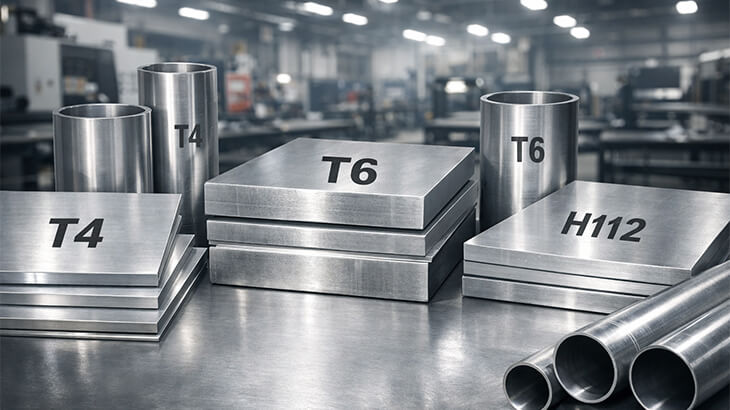
Cracking the Code: Understanding Aluminum Tempers (T4, T6, H112) for Your Next Project

If you have ever shopped for metal materials in the USA, you know that buying an aluminum bar isn’t as simple as just picking a size. You are often met with a string of cryptic letters and numbers following the alloy grade, such as “6061-T6” or “5083-H112.”

For DIY enthusiasts, engineers, and fabricators alike, these codes—known as temper designations—are the difference between a project that succeeds and one that snaps under pressure. At Aluminium Tubes, we believe that knowing your materials is just as important as the design itself.

In this guide, we will get the aluminum temper designation explained in plain English, focusing on the three most common designations you’ll encounter: T4, T6, and H112.

The Basics: What is an Aluminum Temper?

While the alloy number (like 6061 or 3003) tells you what ingredients are in the metal (magnesium, silicon, copper, etc.), the temper tells you what the metal has been through to get to its current state.

Aluminum can be strengthened through heat treatment or strain hardening (cold working). The Aluminum Association uses a standard system to identify these treatments. The letter generally indicates the basic treatment class:

  • F: As fabricated (no special control).
  • O: Annealed (softest state).
  • H: Strain-hardened (strengthened by cold working, like rolling).
  • T: Thermally treated (heat-treated),.

Let’s dive into the specific tempers you are most likely to find on our shelves.

T6 Temper Definition: The Strength Standard

When you see “T6,” think “maximum strength.” This is the gold standard for structural applications.

The T6 temper definition refers to a process where the aluminum is solution heat-treated and then artificially aged. In practical terms, the metal is heated to a high temperature, cooled (quenched), and then held at a lower elevated temperature in a furnace for a specific time to lock in its mechanical properties.

Why choose T6?

  • High Strength: 6061-T6, for example, has a yield strength of about 40,000 psi (276 MPa), making it ideal for heavy-duty load-bearing applications.
  • Rigidity: It is excellent for structures that need to maintain their shape without bending.

However, this strength comes with a trade-off. T6 aluminum has lower ductility (around 8–10% elongation), meaning it is harder to bend without cracking compared to softer tempers.

Best Uses: Bicycle frames, automotive chassis, aerospace structures, and heavy-duty structural components.

T4 Temper: The Formable Alternative

If T6 is the strong, rigid sibling, T4 is the flexible one. The T4 designation means the metal was solution heat-treated and then naturally aged to a stable condition,. Instead of being baked in a furnace to age (like T6), it is allowed to age at room temperature.

Why choose T4?

  • Workability: T4 offers excellent formability and ductility (10–16% elongation).
  • Fabrication: It is the go-to choice if your project involves bending the aluminum bar or tube.

If you try to bend a T6 bar 90 degrees, it might snap. If you do the same with a T4 bar, it is much more likely to bend cleanly. Interestingly, some fabricators form the metal in the T4 state and then artificially age it to T6 afterward to get the best of both worlds.

H112 Aluminum Bar Uses: The Extruder’s Choice

The H112 designation is unique and often misunderstood. Unlike T-tempers, which rely on heat treatment, H-tempers are generally for non-heat-treatable alloys (like the 5000 series).

H112 applies to products that acquire some temper (hardening) just from the shaping process itself—usually extrusion or hot rolling—without special control over the amount of strain hardening,. However, unlike “As Fabricated” (F) materials, H112 products must still meet specific mechanical property limits.

H112 aluminum bar uses typically involve the 5000-series alloys, such as 5083. This temper is common in:

  • Marine Applications: Because alloys like 5083-H112 offer exceptional corrosion resistance in saltwater.
  • Fluid Handling: Extruded tubes and pipes used in hydraulic or pneumatic systems often utilize this temper.

If you are looking for a marine-grade aluminum bar that offers moderate strength and high corrosion resistance, you will likely be looking at an H112 specification.

How to Choose Aluminum Temper for Your Project

Knowing how to choose aluminum temper comes down to three main questions regarding your project’s needs:

  1. Do you need to bend it? If you are building a custom roll cage or a curved architectural feature, choose T4. Its higher ductility allows for forming without failure.
  2. Does it need to support heavy weight? If you are building a workbench, a trailer frame, or a support beam, choose T6. The heat treatment provides the yield strength necessary to resist deformation under load.
  3. Is it for a marine environment? If the project is on a boat or a dock, look for 5000-series alloys (like 5083 or 5086) in the H112 temper. These offer the best protection against the elements,.

Aesthetics and Finish: Black Aluminum Flat Bar

Once you have selected the right alloy and temper, you often have to consider the finish. At Aluminium Tubes, we see high demand for black aluminum flat bar.

Usually made from 6061-T6 or 6063-T5, these bars are often anodized. Anodizing is a surface treatment that thickens the natural oxide layer on the aluminum part. This not only creates a sleek, professional black finish but also increases corrosion resistance and surface hardness. Whether for architectural trim, custom furniture, or framing, a black anodized flat bar provides a “finished” look right off the shelf, saving you painting time.

Conclusion

Whether you are an engineer specifying materials for an aerospace application or a hobbyist building a custom rig in your garage, understanding the difference between T6 strength, T4 formability, and H112 utility is essential.

At Aluminium Tubes, we are dedicated to helping our US customers find the exact grade and temper they need. From high-strength structural tubes to versatile aluminum bar stock, we have the inventory and the expertise to get your project moving.

Need help selecting the right aluminum for your next build? Browse our catalog today or contact our support team for expert advice.

Preventing Galvanic Corrosion: A Checklist for Joining Aluminum Tubes to Dissimilar Metals

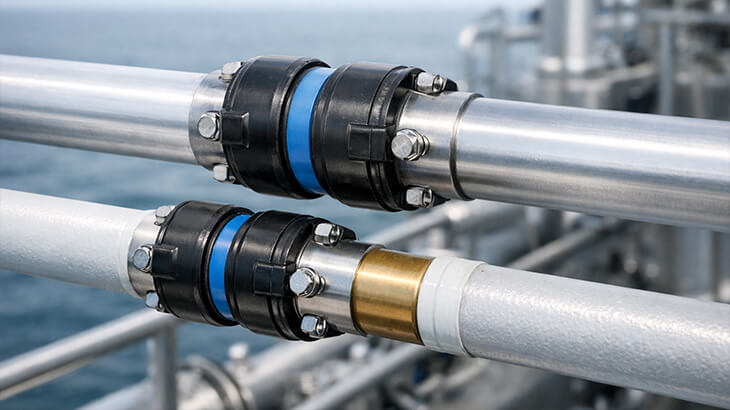
Aluminum is a miracle metal for modern construction and manufacturing. It is lightweight, strong, and naturally resistant to atmospheric corrosion. However, for builders and engineers across the USA, aluminum has one significant “Achilles’ heel”: it does not play well with others. When you connect aluminum tubes to metals like carbon steel or stainless steel, you risk triggering a chemical reaction known as galvanic corrosion.

At Aluminium Tubes, we believe in not only supplying the highest quality materials but also ensuring they last a lifetime in your projects. Whether you are building marine structures, industrial frameworks, or custom automotive parts, understanding how to manage dissimilar metals is critical. This guide provides a practical checklist for galvanic corrosion prevention aluminum users need to know.

What is Galvanic Corrosion?

Before diving into the solution, it helps to understand the problem. Galvanic corrosion occurs when two different metals are in electrical contact while submerged in or wetted by an electrolyte (like saltwater, condensation, or even rainwater).

Think of it as a battery. One metal acts as the anode (the active metal) and the other as the cathode (the noble metal). In this reaction, electrons flow from the anode to the cathode. Unfortunately for us, aluminum is near the “active” end of the galvanic series, meaning it usually becomes the anode. Consequently, the aluminum sacrifices itself, corroding at an accelerated rate to protect the other metal.

The Dissimilar Metal Contact Guide

To protect your Aluminium Tubes products, you must know which metals pose the biggest threat. The further apart two metals are on the galvanic series, the higher the voltage potential and the faster the corrosion.

  • High Risk: Copper, Brass, Bronze.
  • Moderate/High Risk: Carbon Steel, Stainless Steel (300 series).
  • Low Risk: Zinc (Zinc actually protects aluminum, which is why it is used in sacrificial anodes).

Your Checklist for Joining Aluminum to Dissimilar Metals

If your design requires joining aluminum to stainless steel or carbon steel, you do not have to abandon the idea. You simply need to break the “battery circuit.” Use this checklist to ensure your joints remain secure and corrosion-free.

1. Isolate the Metals (Break the Circuit)

The most effective way to stop galvanic corrosion is to prevent the two metals from touching directly.

  • Use Washers and Gaskets: Insert non-conductive materials such as neoprene, rubber, plastic, or nylon between the aluminum tube and the steel bracket or plate.
  • Install Bushings and Sleeves: For bolted connections, the bolt shank itself can create a bridge between the metals. Use plastic or nylon sleeves inside the bolt holes to ensure full electrical isolation.
  • Use PTFE: For high-end applications, Polytetrafluoroethylene (PTFE) pads or coated washers provide excellent insulation and water repellency, breaking the water film that facilitates corrosion.

2. Get Your Coating Strategy Right

Painting or powder coating is a common defense, but there is a specific rule you must follow.

  • Coat the Cathode (Steel): If you can only coat one metal, coat the more noble metal (the steel). If you coat only the aluminum (the anode) and that coating gets scratched, the corrosion will focus intensely on that small scratch, leading to rapid failure.
  • Coat Both: Ideally, apply a dielectric coating (like epoxy or polyurethane) to both surfaces to seal out the electrolyte entirely.

3. Manage the Area Ratio

Size matters in galvanic corrosion.

  • Avoid Large Cathodes: Never connect a small aluminum part to a large steel structure without isolation. The large steel cathode will draw a massive current from the small aluminum anode, destroying it quickly.
  • Aim for Large Anodes: Conversely, a large aluminum structure with small stainless steel fasteners is generally safer, though isolation is still recommended.

4. Fastener Selection

Fasteners are the most common failure points.

  • Choose Stainless Steel Carefully: While 300-series stainless steel fasteners are standard, they are cathodic to aluminum. Always use them in conjunction with insulating plastic or nylon washers.
  • Avoid Galvanized Bolts: Zinc plating on steel bolts can wear off, leaving bare steel in contact with your aluminum tubing, restarting the corrosion cycle.

5. Eliminate the Electrolyte (Drainage)

Without water (the electrolyte), the reaction cannot happen.

  • Design for Drainage: Ensure your aluminum tube structures allow water to drain away rather than pool at the joints.
  • Use Sealants: Apply corrosion-inhibiting pastes or sealants in the crevices between joints to keep moisture out.

Aluminum Tube Maintenance Tips

Even with the best design, environmental factors change. Regular maintenance is key to longevity, especially in the US coastal or industrial regions where salt and pollution increase conductivity.

  • Inspect for “White Rust”: Unlike red iron rust, aluminum corrosion appears as a white, chalky sludge (aluminum hydroxide). If you see this around a joint, your isolation method may have failed.
  • Rinse Regularly: If your application is near the ocean or salted roads, rinse the tubes with fresh water to lower the conductivity of the surface environment.
  • Check Sealants: Over time, sealants and plastic washers can degrade from UV exposure. Inspect these barriers annually and replace them if they become brittle or cracked.

Conclusion

Using aluminum in conjunction with other metals opens up a world of structural possibilities, provided you respect the chemistry involved. By isolating connections, choosing the right coatings, and managing moisture, you can ensure your projects stand the test of time.

At Aluminium Tubes, we are dedicated to helping our US customers build smarter and stronger. Whether you need high-grade material for a new project or advice on maintaining existing structures, we are here to support your success. Don’t let corrosion eat away at your investment—plan ahead and build with confidence.

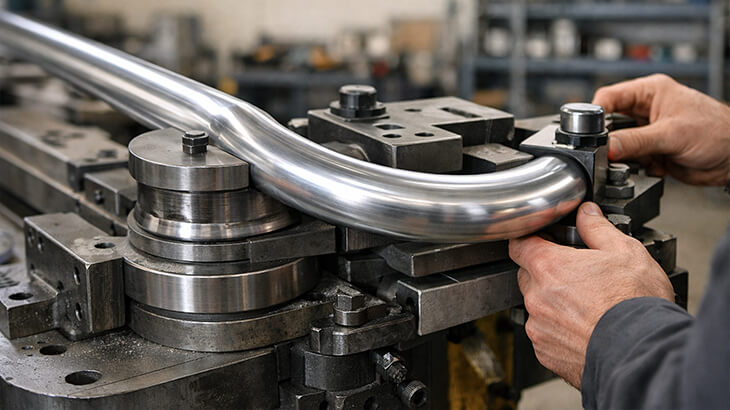
The Art of the Curve: How to Bend Aluminum Tubing Without Kinking

For fabricators, engineers, and DIY enthusiasts across the USA, there are few moments more frustrating than watching a pristine piece of aluminum round tube collapse into a jagged kink during a bend. Whether you are building a custom roll cage, fabricating intake piping for an automotive project, or designing architectural frames, the integrity of your bend matters. A kink isn’t just an aesthetic failure; it restricts flow and compromises structural strength.

At Aluminium Tubes, we understand that starting with high-quality material is only half the battle. The other half is the technique. Here is a comprehensive guide on how to achieve smooth, professional bends without the heartbreak of a kinked tube.

Understanding Why Kinks Happen

To prevent a kink, you have to understand the physics behind it. When you bend a tube, two opposing forces are at work: the outside wall of the tube stretches and thins out, while the inside wall compresses.

Kinking—often referred to as crimping—occurs when the tube folds or collapses inward because the material cannot withstand the compressive force, or the bend radius is too tight for the wall thickness. Essentially, without proper support, the tube takes the path of least resistance and folds rather than curving.

Step 1: Material Selection Matters

Before you even touch a bender, you must ensure you are using the right alloy and temper. Not all aluminum round tube is created equal.

  • Alloy Selection: For projects requiring significant bending, alloys like 3003 and 5052 are often superior choices because they offer higher ductility and workability. While 6061 is a structural standard in the US, it can be more challenging to bend depending on its heat treatment.
  • Temper: The “temper” designation tells you how hard the metal is. 6061-T6 is very hard and strong, making it prone to cracking or kinking during tight bends. For tighter radii, we at Aluminium Tubes often recommend T3 or T4 tempers, or even naturally aged T3, as they are softer and more pliable than T6. If you must use T6, you may need to anneal the bending area to soften it, though this reduces the strength.

Step 2: Know Your Numbers (Wall Factor and Radius)

Feasibility usually comes down to math. Professional benders use a calculation called the “Wall Factor” (Tube Outside Diameter ÷ Wall Thickness) and the “D of Bend” (Centerline Radius ÷ Tube OD).

Generally, the thinner the wall relative to the diameter, the harder it is to bend without support. A thin-walled tube (High Wall Factor) is highly susceptible to collapsing. If you are attempting a tight radius (less than 2 times the tube diameter) on a thin-walled tube, you cannot rely on simple force; you need internal support.

The Professional Solution: Mandrel Bending

If you are wondering how aerospace or performance automotive shops get those perfect, tight bends, the answer is usually a mandrel.

A mandrel is a tool inserted inside the tube during the bending process. Its job is to support the interior walls to prevent them from collapsing or wrinkling while the die forms the curve. For standard bends, a plug mandrel might suffice, but for high-precision or thin-walled aluminum round tube, a flexible ball mandrel is often required. This tool consists of linked ball segments that flex inside the bend, providing continuous support throughout the radius.

Using a mandrel significantly reduces the risk of flattening (ovality) and kinking, ensuring the tube maintains its round cross-section.

The DIY Solution: The Sand Packing Method

Not everyone has access to a CNC mandrel bender. If you are working from a home shop with a manual bender, you can still achieve kink-free results by creating a “poor man’s mandrel” using sand.

Here is the process:

  1. Cap one end: Securely seal one side of your aluminum tube.
  2. Fill with sand: Use fine, dry sand. It is crucial to eliminate air gaps. Tap the tube vibrationally as you fill it to ensure the sand settles tightly.
  3. Cap the other end: Seal the tube tightly so the sand is compressed inside.
  4. Bend: As you bend the tube, the sand acts as a non-compressible core, distributing the pressure evenly and supporting the inner walls against collapse.

This method is time-tested and effective for preventing kinks and flattening in thin-walled tubes when professional tooling isn’t available.

Troubleshooting Common Issues

Even with the right tools, things can go wrong. Here are quick fixes for common issues:

  • Wrinkling on the inside radius: This often means the wiper die (a tool used to smooth the inside of the bend) isn’t set correctly, or your clamping pressure is too loose.
  • Tube Slippage: If the tube slips in the clamp die, you may get kinks. Ensure your tooling is clean and consider increasing clamping pressure.
  • Lubrication: Never bend dry. Friction is the enemy. Use a proper lubricant to reduce drag between the tube and the tooling. For aluminum, heavy-duty lubricants are often necessary to prevent galling (metal pickup) on the tools.

Partnering with Aluminium Tubes

Whether you are using a rotary draw bender with a wiper die and mandrel, or packing sand for a one-off prototype, the quality of your finished product starts with the quality of your tube.

At Aluminium Tubes, we supply premium grade aluminum round tube tailored to the US market. We can help you select the correct wall thickness and temper to ensure your project succeeds—straight or curved. Don’t let poor-quality metal be the reason your project kinks.

Ready to start your next fabrication project? Browse our inventory today and find the material that bends to your will, not the other way around.

Navigating the Waters: A Guide to Understanding Marine Grade Aluminum

For boat builders, marine engineers, and coastal property owners, the battle against the elements is constant. Saltwater is notoriously unforgiving, capable of corroding standard metals in a fraction of their expected lifespan. This is where the right material makes all the difference. At Aluminium Tubes, we understand that selecting the correct alloy isn’t just about durability—it is about safety, efficiency, and longevity.

Whether you are retrofitting a sailboat mast, designing a new hull, or sourcing piping for an offshore rig, understanding “marine grade” is essential. This guide explores why specific aluminum alloys rule the waves and how to choose the right one for your project.

What Exactly is Marine Grade Aluminum?

While pure aluminum naturally offers a level of protection, it is generally too soft for structural applications. To create “marine grade” metal, aluminum is alloyed—mixed with other elements like magnesium or silicon—to enhance its strength and durability while maintaining its ability to withstand harsh environments.

The term “marine grade” generally refers to alloys that belong to the 5xxx and 6xxx series. These materials are celebrated for their high strength-to-weight ratio; in fact, an aluminum hull can be 40% to 50% lighter than a steel equivalent, leading to shallow draughts and lower fuel consumption.

Most importantly, these alloys are categorized as corrosion resistant aluminium. Unlike steel, which requires constant painting to prevent rust, marine grade aluminum spontaneously forms a thin, impervious oxide layer that shields the metal from further oxidation. This natural self-healing mechanism is what makes it the material of choice for everything from pleasure boat superstructures to merchant ships.

The Heavy Hitters: 5xxx vs. 6xxx Series

When browsing our inventory at Aluminium Tubes, you will likely encounter these two dominant families of alloys. Understanding the difference is key to your project’s success.

The 5xxx Series: The Hull and Plate Specialists

The 5xxx series is alloyed primarily with magnesium. These are non-heat treatable alloys known for their excellent resistance to seawater and industrial chemicals.

  • 5083: Often considered the industry standard for shipbuilding, 5083 is the strongest of the non-heat treatable alloys. It retains exceptional strength after welding and is commonly used for ship hulls, pressure vessels, and drilling rigs,. It is so robust that it is even used in cryogenic applications and vehicle armor.
  • 5086: Slightly more formable than 5083, this alloy is excellent for applications where the metal needs to be cold-worked into shape. It is a versatile choice for small boat hulls and gangways.
  • 5052: While it has lower strength compared to 5083, 5052 offers superior formability. It is often used for fuel lines, tanks, and smaller vessels where complex shapes are required.

The 6xxx Series: The Structural and Piping Experts

For our customers at Aluminium Tubes, the 6xxx series is often of particular interest because these alloys are easily extruded into complex shapes, including tubes, bars, and profiles.

  • 6061 and 6082: These are silicon and magnesium alloys. While 5083 is the go-to for plating, 6082 is the standard for extrusions (like the tubing used in railings, masts, and frames),. It is a high-strength alloy suitable for highly loaded structural applications, such as scaffolding elements and offshore construction.

Defending Against the Elements: Corrosion and Maintenance

Even high-quality corrosion resistant aluminium requires proper care to maximize its lifespan. While the metal’s oxide layer offers superb protection, marine environments present unique challenges like galvanic corrosion.

The Danger of Galvanic Corrosion

This occurs when aluminum is electrically connected to a different metal (like a stainless steel propeller shaft) while submerged in an electrolyte (seawater). The aluminum can act as an anode and corrode to protect the other metal.

To prevent this:

  1. Isolate Metals: Use insulating washers, plastic spacers, or sealing wax to break the contact between aluminum tubes and steel bolts.
  2. Use Anodes: Sacrificial anodes made of zinc or aluminum (for saltwater) are essential. They “sacrifice” themselves to corrosion, sparing your aluminum hull or structure. Note: Magnesium anodes should generally be reserved for fresh water, as they can cause damage in saltwater environments.

Painting and Coatings

While marine grade aluminum technically does not require paint for protection, many owners choose to paint for aesthetics or antifouling. Preparation is critical. The surface must be meticulously cleaned and sanded to remove old oxidation, followed by the application of an epoxy primer to ensure a strong bond.

Why Choose Aluminium Tubes?

Navigating the specifications of marine alloys can be complex. For instance, did you know that while 5083 is stronger, 6082 has a finer grain structure that makes it excellent for resisting dynamic loading conditions?

At Aluminium Tubes, we specialize in providing top-tier aluminum products that meet the rigorous demands of the American marine industry. Whether you need 6082 structural tubing for a new T-top frame or 5083 plate for a hull repair, we ensure you get the specific grade required for safety and performance.

Key Takeaways for Your Next Project:

  • Weight Matters: Switching to aluminum can save up to 50% in structural weight compared to steel.
  • Match the Alloy to the Job: Use 5083/5086 for plates and hulls; choose 6082/6061 for tubes and extrusions.
  • Watch Your Connections: Always insulate aluminum from other metals to prevent galvanic corrosion.

Ready to start your project? Contact Aluminium Tubes today to discuss your requirements. We are here to help you build lighter, stronger, and smarter.

How Aluminum Is Produced: Step-by-Step Guide

How Aluminum Is Produced: Step-by-Step Guide

For many of us in the United States, aluminum is a part of daily life. It’s in the vehicles we drive, the buildings we work in, and the devices we use to communicate. But have you ever stopped to consider the journey this metal takes before it becomes a finished product?

At Aluminium Tubes, we believe that understanding the materials you use is the first step to successful fabrication and construction. Whether you are an engineer, a contractor, or a DIY enthusiast, knowing the supply chain ensures you are selecting the right grade and quality for your project.

Here is a deep dive into the fascinating world of aluminum production, from the red earth of the tropics to the high-tech extrusion lines that create our products.

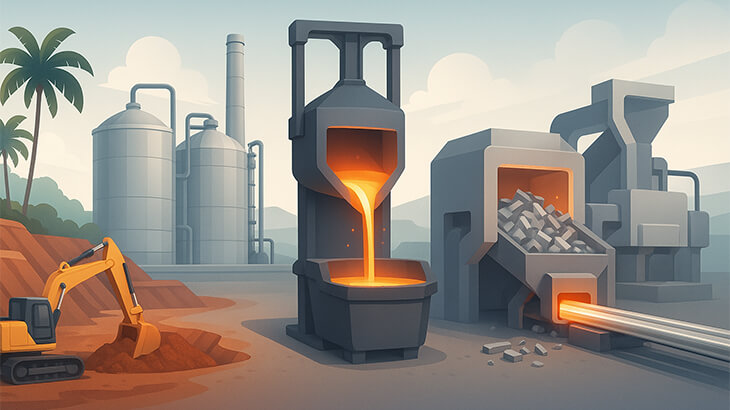
Step 1: Mining the Raw Material

The lifecycle of every aluminum tube begins with bauxite. Bauxite is a reddish clay ore found primarily in the topsoil of tropical and subtropical regions. It is one of the most abundant elements in the Earth’s crust, containing 30–60% aluminum oxide.

While the US produces some bauxite, the vast majority of the world’s reserves are found in countries like Guinea, Australia, Brazil, and Vietnam. The ore is mined, crushed, and washed to remove clay and silica before being transported to refineries.

Step 2: The Bayer Process (Refining)

Once mined, the bauxite must be transformed into alumina (aluminum oxide). This is achieved through a chemical procedure known as the Bayer process, developed in the late 19th century.

  1. Digestion: The crushed bauxite is mixed with a hot solution of caustic soda (sodium hydroxide) and heated under pressure. This dissolves the aluminum oxide while leaving impurities behind.
  2. Clarification: The mixture is filtered. The undissolved impurities, known as “red mud” or bauxite residue, are separated from the liquid sodium aluminate.
  3. Precipitation: The liquid is cooled and seeded with crystals, causing the aluminum to precipitate out of the solution as solid sugar-like crystals called alumina tri-hydrate.
  4. Calcination: Finally, these crystals are heated at temperatures exceeding 2,000°F (approx 1,100°C) to remove water content.

The result is a fine, white powder: pure alumina. It takes roughly two pounds of alumina to produce a single pound of aluminum metal.

Step 3: The Hall-Héroult Process (Smelting)

Turning that white powder into molten metal requires massive amounts of energy. This stage, known as primary aluminium production, utilizes the Hall-Héroult process.

The alumina is dissolved in a bath of molten cryolite (a salt) within a large steel pot lined with carbon. A powerful electric current is passed through the mixture via carbon anodes. This current breaks the chemical bond between the aluminum and the oxygen. The oxygen reacts with the carbon anode to create carbon dioxide, while pure liquid aluminum sinks to the bottom of the pot.

The molten metal is siphoned off and cast into various forms, such as ingots for rolling or billets for extrusion.

Step 4: The Rise of Secondary Aluminum (Recycling)

While the primary smelting process is energy-intensive, aluminum has a distinct advantage: it is 100% recyclable without any loss of properties. This is where secondary aluminum production comes into play, a sector that is vital to the US manufacturing landscape.

Secondary production involves melting down scrap aluminum—from used beverage cans to old window frames—rather than extracting it from ore. The difference in energy consumption is staggering. Producing secondary aluminum requires 95% less energy than primary production.

Increasing aluminum recycling rates by just 10% can decrease processing gas emissions by up to 15%. Because the metal retains its performance characteristics, the recycled material can be reformed into high-performance products again and again.

Step 5: Fabrication and Extrusion

Once the aluminum is cast into billets (logs of aluminum), it is ready for fabrication. This is the stage where Aluminium Tubes steps in to provide value to our customers.

One of the most common methods for creating tubes is extrusion. Imagine squeezing toothpaste out of a tube; aluminum extrusion works on a similar principle. The aluminum billet is heated until it is malleable (soft but not liquid) and forced through a steel die with a specific cross-sectional profile.

This process allows for the creation of complex shapes, including round, square, and rectangular tubes, with precise tolerances. The resulting products offer an exceptional strength-to-weight ratio and natural corrosion resistance, making them ideal for aerospace, construction, and industrial machinery.

The Future of Aluminum

The industry is currently undergoing a revolution to become greener. Innovations are rolling out globally to reduce the carbon footprint of primary aluminium production. For example, new “inert anode” technology is being developed to release oxygen instead of carbon dioxide during smelting. Furthermore, manufacturers are increasingly integrating hydrogen power and solar energy into the refining process to move toward Net Zero emissions.

Why Choose Aluminium Tubes?

Understanding the complexity of the manufacturing process highlights why quality control matters. From the purity of the alloy during smelting to the precision of the die during extrusion, every step affects the final strength and finish of the product.

At Aluminium Tubes, we are dedicated to sourcing materials that meet the highest standards of production and sustainability. Whether you need materials for a high-stress structural framework or a custom design project, we ensure that the metal you receive has been crafted for performance.

Ready to start your next project? Browse our extensive inventory or contact our team today to find the perfect profile for your needs. Let us help you build with the strength and versatility of aluminum.

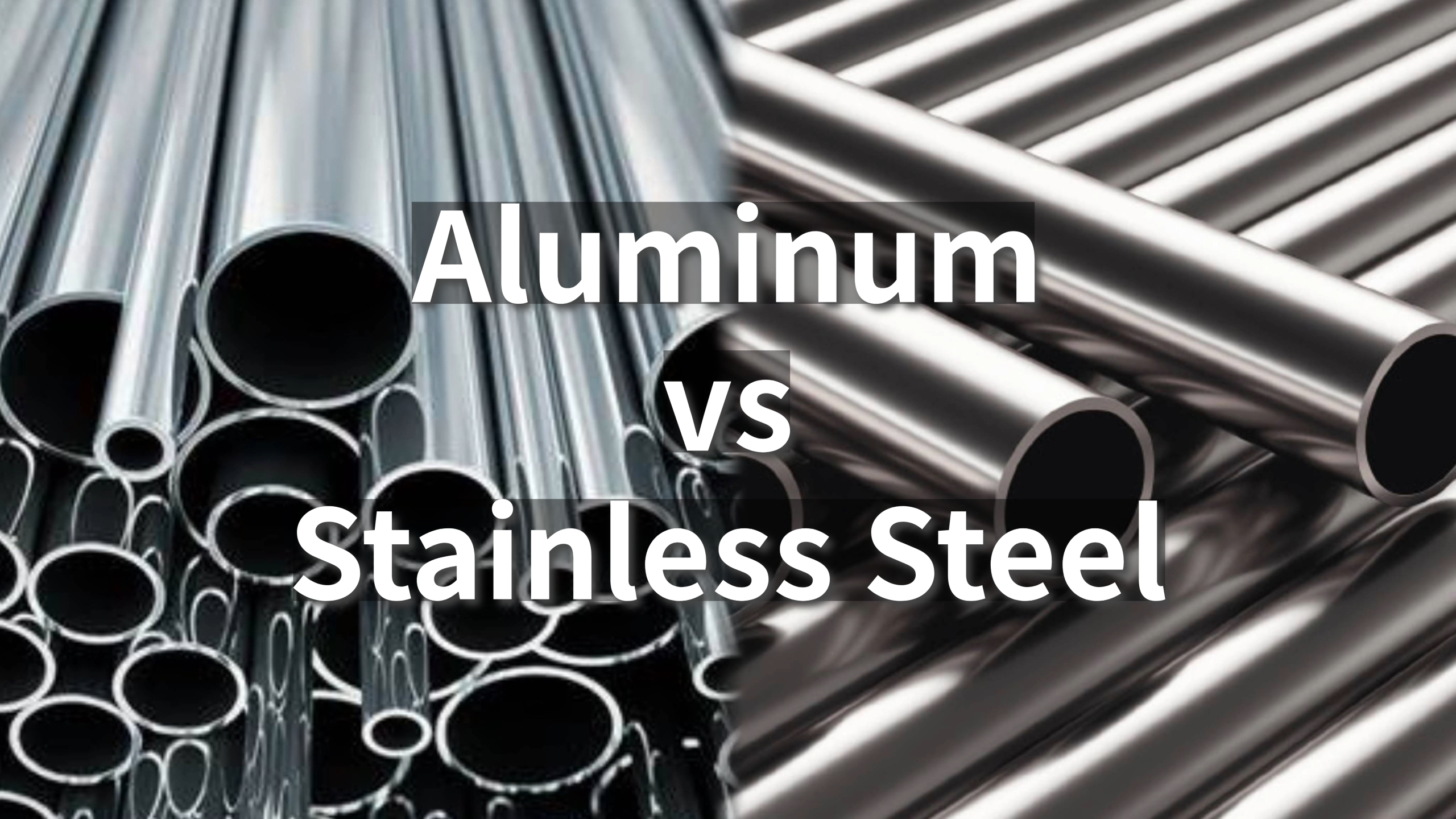
Aluminum Tubes vs Steel Tubes: Which One is Right for Your Project?

Choosing the right material for industrial and construction projects is critical for ensuring structural integrity, longevity, and cost-effectiveness. Two of the most commonly used metals are aluminum and steel. While both have unique strengths, aluminum tubes are gaining popularity across the USA for their lightweight design, corrosion resistance, and versatility.

In this article, we compare aluminum tubes and steel tubes across multiple factors to help manufacturers, engineers, and builders make informed decisions for their projects.


1. Weight Comparison

Weight is one of the primary considerations in material selection. Aluminum is approximately one-third the weight of steel, making it significantly lighter without compromising functional strength for most applications.

  • Aluminum Tubes: Lightweight, easy to handle, reduces transportation and installation costs, ideal for projects where weight reduction is critical (e.g., automotive and aerospace).

  • Steel Tubes: Heavy and sturdy, suitable for applications requiring maximum load-bearing capacity but increases labor and transport requirements.

For construction projects or products that require frequent movement or installation at height, aluminum tubes offer a clear advantage due to reduced handling challenges.


2. Strength-to-Weight Ratio

While steel is stronger in absolute terms, aluminum has a high strength-to-weight ratio, meaning it provides substantial strength relative to its lightness.

  • Aluminum: High tensile strength for its weight, ideal for applications where reducing weight is as important as maintaining durability.

  • Steel: Superior ultimate strength, but heavier, which can increase structural load and require stronger foundations or supports.

For example, in aerospace, transportation, and automotive industries, aluminum tubes often outperform steel because every pound saved improves efficiency, fuel economy, and ease of assembly.


3. Corrosion Resistance

Corrosion is a major factor affecting material longevity. Aluminum naturally forms a protective oxide layer that prevents rust and corrosion, even in humid or outdoor environments. Steel, unless treated or coated, is prone to rusting over time.

  • Aluminum Tubes: Naturally corrosion-resistant, ideal for marine, outdoor, and industrial applications without additional coatings.

  • Steel Tubes: Requires galvanization, painting, or other protective treatments to prevent rust and extend lifespan.

Choosing aluminum reduces maintenance needs and increases durability in environments exposed to moisture, chemicals, or weather fluctuations.


4. Fabrication and Cost

Ease of fabrication and cost considerations can influence project timelines and budgets.

  • Aluminum Tubes: Easier to cut, bend, weld, and machine. Custom shapes and sizes are simpler to achieve, which is particularly valuable in complex projects. Though the initial cost may be slightly higher than standard steel, long-term benefits such as reduced labor, faster assembly, and lower maintenance can offset the upfront expense.

  • Steel Tubes: Harder to machine and bend, requiring heavier equipment. Can be more cost-effective upfront but may incur higher labor and maintenance costs over time.

Aluminum’s lightweight nature and flexibility make it a cost-effective solution for modern manufacturing and construction.


5. Industry Applications

Both aluminum and steel tubes have their niches:

  • Aluminum Tubes: Automotive components, aerospace frameworks, HVAC systems, outdoor railings, scaffolding, and modular construction.

  • Steel Tubes: Heavy-duty construction, pipelines, structural supports, industrial machinery, and applications where maximum load-bearing is essential.

In many cases, aluminum tubes are replacing steel in applications where weight, corrosion resistance, and ease of fabrication are more important than sheer strength.


6. Sustainability Considerations

Sustainability is increasingly important in today’s manufacturing and construction practices. Aluminum tubes are 100% recyclable without loss of quality, and using recycled aluminum requires significantly less energy than producing steel from raw materials.

Steel is also recyclable, but aluminum’s lower weight and energy-efficient production make it a greener option for eco-conscious industries. By choosing aluminum, manufacturers can contribute to sustainable practices and meet environmental compliance standards, including LEED certifications.


7. Making the Right Choice

Ultimately, the decision between aluminum tubes and steel tubes depends on your project requirements:

  • Choose aluminum tubes if you need lightweight materials, corrosion resistance, ease of handling, and long-term cost efficiency.

  • Choose steel tubes if your project demands maximum strength, extreme load-bearing capacity, or lower initial material costs.

For many modern applications — particularly in construction, transportation, and industrial machinery — aluminum tubes provide the best balance of performance, durability, and efficiency.


Conclusion

Both aluminum and steel tubes have their place in manufacturing and construction. However, the advantages of aluminum — lightweight design, corrosion resistance, ease of fabrication, sustainability, and versatility — make it a preferred choice for many projects across the USA.

By evaluating your specific project needs, including weight requirements, environmental exposure, and long-term costs, you can select the ideal material that ensures durability, efficiency, and high performance.

How Aluminum Tubes Are Revolutionizing the Construction Industry

How Aluminum Tubes Are Revolutionizing the Construction Industry

The construction industry is constantly evolving, with new materials and technologies shaping the way buildings, bridges, and infrastructures are designed and built. Among these innovations, aluminum tubes have emerged as a game-changer. Known for their lightweight structure, durability, and flexibility, aluminum tubes are increasingly replacing traditional steel and other metals in a variety of construction projects.

From commercial buildings to residential projects and large-scale infrastructures, aluminum tubing offers unmatched benefits that streamline construction processes, reduce costs, and enhance the longevity of structures. In this article, we explore how aluminum tubes are revolutionizing the construction industry across the USA.


1. Ease of Installation

One of the most compelling advantages of aluminum tubes in construction is their lightweight nature. Aluminum is roughly one-third the weight of steel, which significantly simplifies transportation and installation. Workers can handle aluminum tubes with greater ease, reducing labor costs and installation time.

In high-rise buildings or complex structures where lifting heavy materials can be challenging, aluminum tubes provide a practical solution. They can be easily transported to job sites and maneuvered into position without heavy machinery. This not only speeds up the construction process but also minimizes the risk of workplace injuries, making construction sites safer for employees.


2. Durability and Longevity

Durability is a top priority in construction, and aluminum tubes deliver exceptional performance in this area. Unlike steel, aluminum is naturally resistant to rust and corrosion, even when exposed to moisture, chemicals, or harsh weather conditions.

This corrosion resistance ensures that aluminum structures maintain their integrity over decades, reducing the need for frequent repairs or replacements. Whether used for scaffolding, railings, roofing supports, or structural frameworks, aluminum tubes withstand environmental challenges while retaining strength and stability.

For architects and builders, this means fewer maintenance concerns, longer-lasting structures, and reduced overall costs over the building’s lifespan.


3. Design Flexibility

Aluminum tubes are highly versatile and can be fabricated into various shapes, sizes, and thicknesses to meet specific construction requirements. They can be bent, cut, or welded without compromising structural integrity, allowing architects and engineers to explore innovative designs that were difficult to achieve with heavier metals.

For example, aluminum tubing is ideal for curved structures, modern facades, or lightweight frameworks where aesthetic appeal and functionality are equally important. The material’s flexibility also makes it possible to create modular structures that can be assembled and reconfigured efficiently, offering solutions for temporary installations or adaptable building designs.


4. Sustainable Construction

Sustainability is increasingly important in modern construction, and aluminum tubes offer significant environmental benefits. Aluminum is fully recyclable without losing quality, and producing recycled aluminum requires far less energy than creating new aluminum from raw materials.

By using aluminum tubes, construction companies reduce their carbon footprint while contributing to sustainable building practices. Many architects and developers are now prioritizing eco-friendly materials, and aluminum tubes allow them to meet green building certifications, including LEED (Leadership in Energy and Environmental Design).

Additionally, aluminum’s lightweight nature reduces transportation emissions, further enhancing its sustainability profile.


5. Real-World Applications and Case Studies

Aluminum tubes are being utilized in a wide array of construction projects across the USA:

  • Commercial Buildings: Aluminum tubes are used in curtain walls, window frames, and interior supports due to their strength, corrosion resistance, and modern aesthetic.

  • Bridges and Walkways: Lightweight aluminum tubing reduces structural load while providing long-lasting durability in outdoor applications.

  • Residential Projects: Aluminum tubes are ideal for railing systems, decks, pergolas, and fencing, offering both safety and design flexibility.

  • Industrial Construction: Factories and warehouses use aluminum tubing for HVAC supports, machinery frameworks, and piping structures.

A notable example is the use of aluminum tubes in modular construction, where pre-fabricated aluminum frameworks allow for faster assembly on-site, reducing labor time and overall project costs.


6. Cost-Effectiveness

While aluminum may have a slightly higher upfront cost compared to some traditional metals, its long-term value is significant. Reduced transportation costs, lower labor requirements, and minimal maintenance needs translate into substantial savings over the life of a construction project.

Investing in aluminum tubes allows construction companies to balance initial expenditures with long-term efficiency, durability, and sustainability — making it a smart choice for both budget-conscious and premium projects.


Conclusion

Aluminum tubes are transforming the construction industry by combining lightweight design, durability, flexibility, and eco-friendliness. From simplifying installation to providing corrosion-resistant solutions and enabling innovative designs, aluminum tubes have proven themselves as an indispensable material in modern construction.

For architects, builders, and developers across the USA, integrating high-quality aluminum tubes into projects not only improves efficiency and aesthetics but also ensures long-lasting structures that are environmentally responsible.

Looking to enhance your construction projects with premium aluminum tubes? Contact us today to explore our full range of durable and versatile aluminum tubing solutions for every building need.

Top 5 Advantages of Using Aluminum Tubes in Manufacturing

In today’s competitive manufacturing landscape, choosing the right materials is crucial for producing high-quality, durable, and cost-effective products. Aluminum tubes have emerged as a top choice across various industries due to their unique combination of strength, lightweight design, and corrosion resistance. Whether it’s automotive, construction, aerospace, or industrial applications, aluminum tubes offer benefits that traditional materials like steel often cannot match. In this article, we explore the top five advantages of using aluminum tubes in manufacturing and why companies across the USA are increasingly adopting them.


1. Lightweight Yet Strong

One of the most significant advantages of aluminum tubes is their lightweight nature. Aluminum is about one-third the weight of steel, which makes handling, transportation, and installation far easier and more cost-effective. Despite being lightweight, aluminum tubes maintain impressive strength and structural integrity, making them suitable for applications that require both durability and flexibility.

For manufacturers, this means reduced shipping costs and less strain on machinery during assembly. In industries like automotive and aerospace, where every pound matters, switching to aluminum tubes can lead to substantial fuel savings and improved performance. Additionally, the lightweight nature of aluminum reduces wear and tear on equipment, extending the lifespan of production machinery.


2. Corrosion Resistance

Corrosion is a major concern in manufacturing, especially for products exposed to moisture, chemicals, or extreme weather conditions. Aluminum tubes naturally form a thin oxide layer on their surface, which acts as a protective barrier against rust and corrosion. Unlike steel, which requires additional coatings or treatments, aluminum tubes remain durable and resistant to environmental damage over time.

This inherent corrosion resistance makes aluminum tubes ideal for construction, HVAC systems, marine applications, and outdoor structural frameworks. Manufacturers benefit from longer product lifespans, reduced maintenance requirements, and lower overall costs due to fewer replacements and repairs.


3. Cost-Effective Fabrication

Aluminum is easier to work with than many other metals. It can be cut, bent, welded, and machined with minimal effort, which streamlines the manufacturing process and reduces labor costs. Custom shapes and sizes can be achieved without compromising strength or quality.

Moreover, aluminum tubes are often available in standardized dimensions, which simplifies procurement and inventory management. For manufacturers, this means faster production cycles, lower fabrication costs, and the ability to meet client demands efficiently. Industries that rely on precision tubing, such as robotics, machinery, and automotive components, find aluminum tubes particularly advantageous due to this combination of versatility and ease of fabrication.


4. Environmentally Friendly

Sustainability is a growing priority in modern manufacturing. Aluminum tubes are 100% recyclable without losing their strength or quality. Using recycled aluminum requires significantly less energy than producing new aluminum from raw materials, reducing the carbon footprint of manufacturing operations.

For companies looking to adopt greener practices, aluminum tubes offer an environmentally responsible choice. Industries such as construction, transportation, and industrial equipment increasingly prefer aluminum not only for its functional benefits but also for its positive environmental impact. By integrating aluminum tubes into production, manufacturers contribute to sustainable development and appeal to eco-conscious clients.


5. Versatility Across Industries

Aluminum tubes are remarkably versatile and can be used in a wide range of applications. In the automotive industry, they are used for exhaust systems, chassis components, and structural reinforcements. In construction, aluminum tubes provide lightweight yet durable frameworks for buildings, scaffolding, and handrails. The aerospace sector leverages aluminum tubing for aircraft components where strength-to-weight ratio is critical.

Even in specialized industrial applications, such as hydraulic systems, HVAC, and chemical processing, aluminum tubes deliver reliable performance under various pressures and temperatures. This versatility makes aluminum tubes a practical choice for manufacturers looking to standardize their materials across multiple product lines.


Conclusion

Aluminum tubes have firmly established themselves as a material of choice for manufacturers across the USA due to their lightweight strength, corrosion resistance, cost-effective fabrication, environmental sustainability, and versatility. Switching to aluminum tubing not only improves product performance but also reduces manufacturing costs, enhances operational efficiency, and supports eco-friendly practices.

For manufacturers looking to gain a competitive edge, incorporating high-quality aluminum tubes into your production process can lead to better products, satisfied clients, and long-term growth.

Ready to enhance your manufacturing process with premium aluminum tubes? Contact us today for a quote and explore our wide range of industrial aluminum tubing solutions.