
-
Address: 2, Reading Road,
Edison New Jersey, USA -
Address: 2, Reading Road,
Edison New Jersey, USA
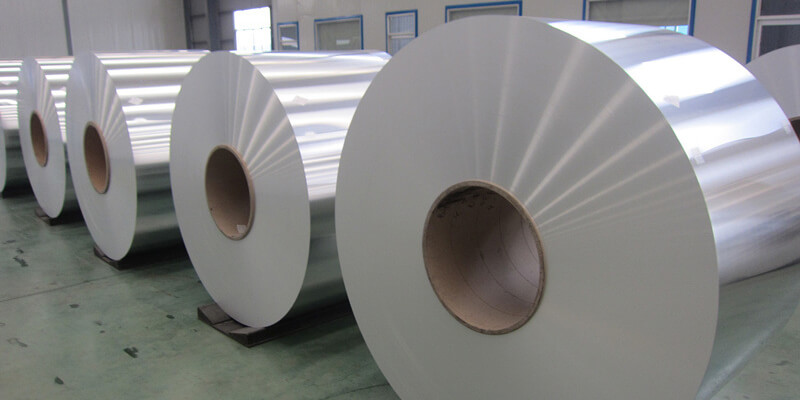
5083 Aluminum Coil is a high-strength aluminum alloy coil known for its excellent corrosion resistance, especially in marine and saltwater environments. It belongs to the 5000 series aluminum family. Magnesium is the main alloying element in 5083 aluminum, with small amounts of manganese and chromium added to improve strength and performance.
5083 Aluminum Coil is widely used where durability, corrosion resistance, and weldability are important. It is commonly selected for marine structures, shipbuilding, pressure vessels, transport equipment, storage tanks, offshore applications, and heavy-duty fabrication.
This alloy is a non-heat-treatable aluminum alloy. Its strength is improved mainly through cold working and strain hardening. It is available in different tempers such as O, H111, H112, H116, and H321, depending on application needs.
Because of its excellent performance in harsh environments, 5083 Aluminum Coil is one of the most trusted aluminum coil grades for marine and industrial use.
5083 Aluminum Coil is chosen because it offers higher strength and better corrosion resistance than many common aluminum grades. It performs especially well in seawater and marine environments, where ordinary aluminum grades may not last as long.
Compared with 3003 Aluminum Coil, 5083 has much higher strength and better corrosion resistance. Compared with 5052 Aluminum Coil, 5083 offers higher strength and better performance in demanding marine and structural applications. Compared with 6061 Aluminum Coil, 5083 has better marine corrosion resistance and better weldability in many applications, although 6061 is usually better for machining.
5083 Aluminum Coil is preferred when the application needs strong, lightweight, and corrosion-resistant material. It is not always the cheapest aluminum grade, but it is often more reliable for marine, offshore, and heavy-duty use. And reliability, as shocking as it may sound, is usually cheaper than replacing failed material later.
5083 Aluminum Coil has a strong set of mechanical and physical properties. Its biggest strength is excellent corrosion resistance in seawater and industrial environments. It also offers high strength, good fatigue resistance, and excellent weldability.
The alloy maintains good performance even in low-temperature environments. This makes it suitable for cryogenic tanks, pressure vessels, marine structures, and transport applications.
5083 Aluminum Coil also has good formability in softer tempers. However, because it is stronger than 3003 and 5052, forming and bending may require more care, especially in harder tempers.
5083 Aluminum Coil offers:
These properties make 5083 Aluminum Coil a strong material choice for marine, industrial, and heavy-duty applications.
5083 Aluminum Coil is available in different thicknesses, widths, coil weights, tempers, and surface finishes. The final size depends on project requirements, supplier capability, and applicable standards.
It can be supplied as full coil, slit coil, or cut-to-length sheet. This helps manufacturers use the material for fabrication, welding, bending, panel making, tank construction, and marine applications.
Common thickness options may include thin gauge, medium gauge, and heavy gauge coil. Widths can also be customized as per machine and project needs. Coil inner diameter, outer diameter, and total coil weight can be selected according to handling and production requirements.
5083 Aluminum Coil can be supplied with:
Tolerances are usually maintained as per ASTM, EN, DIN, or customer-specific standards. Buyers should confirm thickness tolerance, width tolerance, flatness, surface condition, coil ID, coil OD, temper, and packing requirements before ordering.
5083 Aluminum Coil is used in industries where strength and corrosion resistance are very important. It is especially popular in marine and offshore applications because it performs well in saltwater conditions.
In the shipbuilding industry, 5083 Aluminum Coil is used for hulls, decks, panels, superstructures, and other marine components. In the transport industry, it is used for truck bodies, trailers, railway parts, tankers, and vehicle panels.
It is also used in pressure vessels, storage tanks, cryogenic equipment, chemical equipment, offshore platforms, and industrial fabrication. Its high strength and corrosion resistance make it suitable for tough working conditions.
5083 Aluminum Coil is widely used in:
Its wide use shows why 5083 Aluminum Coil is known as one of the most dependable aluminum coil grades for harsh environments.
5083 Aluminum Coil is a non-heat-treatable aluminum alloy. This means its strength cannot be increased by heat treatment like 6061, 6082, or 7075 aluminum alloys.
Instead, 5083 Aluminum Coil gains strength through cold working. Cold working means the material is rolled, stretched, or processed at room temperature to increase hardness and strength. This process changes the internal structure of the metal and improves mechanical performance.
5083 Aluminum Coil is available in different tempers such as O, H111, H112, H116, and H321. The O temper is softer and easier to form. H111 and H112 offer moderate strength and good fabrication properties. H116 and H321 are commonly used for marine applications because they provide better resistance to corrosion and stress-related issues in seawater environments.
Annealing can be used to soften the material after cold working. This improves formability and reduces internal stress. So, while 5083 cannot be strengthened by heat treatment, controlled heating can still be used to manage softness and workability.
This is important because calling every aluminum process “heat treatment” is how people accidentally order the wrong material and then blame the supplier, naturally.
5083 Aluminum Coil offers many advantages for industries that need strong and corrosion-resistant materials. Its biggest advantage is excellent performance in marine and saltwater environments.
It is also stronger than many common aluminum grades. This makes it suitable for structural and heavy-duty applications where ordinary aluminum may not perform well.
Another important advantage is weldability. 5083 Aluminum Coil can be welded using suitable methods without losing too much performance when proper procedures are followed. This makes it useful for tanks, vessels, ships, and fabricated structures.
The main advantages of 5083 Aluminum Coil include:
5083 Aluminum Coil is a strong choice when the application demands durability, safety, and corrosion resistance.
5083 Aluminum Coil is often compared with grades such as 3003, 5052, 6061, and 6082. Each grade has different strength, corrosion resistance, formability, and fabrication performance.
| Alloy Grade | Strength | Formability | Corrosion Resistance | Common Use |
| 3003 | Moderate | Excellent | Good | Roofing, HVAC, cladding |
| 5052 | Medium | Good | Very good | Marine panels, tanks, enclosures |
| 5083 | High | Fair to good | Excellent | Shipbuilding, marine, tanks |
| 6061 | Medium to high | Moderate | Good | Structural and machined parts |
| 6082 | High | Moderate | Good | Bridges, transport, machinery |
5083 Aluminum Coil is preferred when marine corrosion resistance and strength are more important than deep formability. For general roofing and light fabrication, 3003 may be more economical. For moderate marine and sheet metal use, 5052 may be suitable. For machining and structural parts, 6061 or 6082 may be better.
However, for shipbuilding, offshore, pressure vessel, and harsh-environment applications, 5083 Aluminum Coil is often the better choice.
5083 Aluminum Coil can be fabricated using standard industrial methods. It can be cut, slit, formed, rolled, bent, welded, and processed into different shapes. However, because it has higher strength than many aluminum grades, proper tools and methods should be used.
For cutting, common methods include shearing, slitting, laser cutting, CNC cutting, and waterjet cutting. For bending and forming, the correct temper is important. Softer tempers are easier to form, while harder tempers may require a larger bend radius.
5083 Aluminum Coil has very good weldability. It is commonly welded using TIG and MIG welding methods. It is widely used in welded structures such as boats, ships, tanks, vessels, and transport equipment.
Machining is possible, but 5083 is not as easy to machine as 6061. Sharp tools, proper cutting speed, and suitable lubrication should be used to improve surface quality and reduce tool wear.
For better fabrication results:
With proper processing, 5083 Aluminum Coil gives strong, clean, and reliable fabrication results.
5083 Aluminum Coil is available in different surface finishes for industrial, marine, and decorative use. The most common option is mill finish. It has a natural aluminum surface and is suitable for general fabrication.
For better appearance and protection, 5083 Aluminum Coil can be supplied with brushed, polished, anodized, painted, coated, or film-protected finish. Surface protection is especially useful for marine panels, decorative parts, visible structures, and export material.
Protective PVC film can be added to reduce scratches during handling, storage, cutting, and fabrication. For marine use, proper packaging is important to avoid moisture stains and surface damage before installation.
5083 Aluminum Coil can be supplied in:
Customization options may include:
These options help buyers choose the right 5083 Aluminum Coil for marine, industrial, transport, and heavy-duty applications.
The price of 5083 Aluminum Coil depends on several factors. The main factor is the aluminum base price, which changes based on global supply, demand, raw material cost, and energy prices.
5083 Aluminum Coil may cost more than common grades like 3003 or 5052 because it offers higher strength and better marine performance. The temper, thickness, width, coil weight, quantity, surface finish, and processing requirements also affect the final cost.
Custom slitting, cut-to-length service, protective film, special tolerance, testing, certification, and export packing can increase the price. Delivery location, freight, taxes, and import duties also affect the total landed cost.
5083 Aluminum Coil cost depends on:
For accurate pricing, buyers should share grade, temper, thickness, width, quantity, finish, tolerance, testing requirement, packaging type, and delivery location. Otherwise, pricing becomes a guessing game, and the metal industry already has enough chaos without adding astrology to quotations.
5083 Aluminum Coil is used for shipbuilding, marine panels, boat structures, offshore equipment, pressure vessels, storage tanks, truck bodies, trailers, railway components, chemical equipment, and heavy-duty fabrication.
No, 5083 Aluminum Coil is not heat treatable. Its strength is improved through cold working or strain hardening. Annealing can be used to soften the material and improve formability.
Yes, 5083 Aluminum Coil has excellent corrosion resistance. It is especially suitable for seawater, marine, and harsh industrial environments.
Yes, 5083 Aluminum Coil has very good weldability. It can be welded using TIG and MIG welding methods and is commonly used in welded marine and industrial structures.
Yes, 5083 Aluminum Coil can be bent, but the bendability depends on the temper. Softer tempers are easier to form, while harder tempers need a larger bend radius.
5083 Aluminum Coil has higher strength and better performance in demanding marine applications. 5052 Aluminum Coil has good corrosion resistance and better formability for lighter applications.
5083 Aluminum Coil has better marine corrosion resistance and weldability. 6061 Aluminum Coil has better machinability and is commonly used for structural and precision-machined parts.
Yes, 5083 Aluminum Coil is widely used in shipbuilding because it offers high strength, excellent seawater corrosion resistance, and good weldability.
5083 Aluminum Coil is commonly available in O, H111, H112, H116, and H321 tempers. H116 and H321 are often preferred for marine applications.
The price depends on aluminum market rate, thickness, width, temper, quantity, surface finish, coating, slitting, packaging, testing, certification, and delivery location.
+91 95166 18000
support@aluminiumtubes.org