-
Address: 2, Reading Road,
Edison New Jersey, USA -
Address: 2, Reading Road,
Edison New Jersey, USA
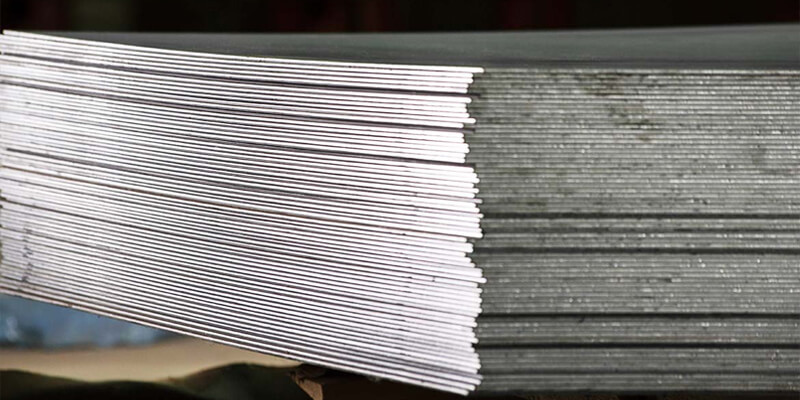
Aluminium Plate 5251 is a medium-strength, non-heat-treatable aluminum alloy from the 5000 series. It is primarily alloyed with magnesium, which gives it excellent corrosion resistance and good mechanical strength. This alloy is widely used in sheet and plate form for applications that require durability, flexibility, and resistance to harsh environments.
Unlike heat-treatable alloys, Aluminium Plate 5251 gains its strength through cold working. It is commonly available in tempers such as H22, H32, and H34, each offering different levels of hardness and strength. This flexibility makes it suitable for both structural and decorative applications.
Because of its smooth surface finish and excellent forming ability, Aluminium Plate 5251 is also widely used in visible and aesthetic applications.
Aluminium Plate 5251 is a preferred choice when corrosion resistance and formability are key requirements. Compared to 3000 series alloys like 3003, it offers higher strength and better durability. Compared to 6000 series alloys like 6061, it provides superior corrosion resistance, especially in marine and chemical environments.
Another reason to choose Aluminium Plate 5251 is its excellent forming ability. It can be bent, rolled, and shaped without cracking, making it ideal for fabrication work. This is especially useful in industries where complex shapes and designs are required.
It also performs well in outdoor conditions. It resists moisture, saltwater, and industrial chemicals, making it a reliable material for long-term use.
Aluminium Plate 5251 offers a well-balanced combination of physical and mechanical properties.
These properties make Aluminium Plate 5251 a dependable material for a wide range of industries.
Aluminium Plate 5251 is available in a wide range of dimensions to meet different industrial needs.
The material is commonly supplied in thicknesses ranging from 1 mm to 150 mm. Standard widths include 1000 mm, 1250 mm, and 1500 mm, while standard lengths are 2000 mm, 2500 mm, and 3000 mm.
Manufacturers often provide custom cutting services. This allows buyers to order plates in specific sizes, reducing waste and improving efficiency in production.
Aluminium Plate 5251 is produced according to international standards such as ASTM and EN. Tight tolerances are maintained for thickness, flatness, and dimensional accuracy. This ensures consistent quality and performance in precision applications.
Aluminium Plate 5251 is widely used across industries due to its corrosion resistance and formability.
It is commonly used in boat panels, deck fittings, and marine structures. Its resistance to saltwater makes it ideal for coastal environments.
It is used in body panels, trims, and interior components due to its lightweight and easy forming properties.
It is used in roofing, cladding, and architectural panels. Its smooth finish also makes it suitable for decorative purposes.
It is used in tanks, containers, and equipment exposed to chemicals and moisture.
Its resistance to corrosion and chemicals makes it suitable for storage and processing equipment.
Aluminium Plate 5251 is not heat-treatable. Instead, its strength is developed through mechanical processes.
The alloy is strengthened by cold working. This includes processes like rolling, bending, and stretching. These processes increase the material’s hardness and strength.
This method of strengthening makes Aluminium Plate 5251 stable and reliable for applications where heat treatment is not required.
There are many benefits to using Aluminium Plate 5251 in industrial applications.
These advantages make it a cost-effective and practical choice for many industries.
Both alloys offer excellent corrosion resistance. However, 5052 has slightly higher strength, while 5251 offers better surface finish and improved formability.
6061 is stronger and heat-treatable. However, 5251 offers better corrosion resistance and is easier to form.
5251 provides higher strength and better durability compared to 3003, making it more suitable for demanding applications.
Overall, Aluminium Plate 5251 is best suited for applications where corrosion resistance and flexibility are more important than maximum strength.
Aluminium Plate 5251 is easy to fabricate due to its ductility and flexibility.
Use sharp tools and moderate cutting speeds. Proper lubrication helps reduce heat and improves surface finish.
Its excellent formability allows it to be used in complex designs and customized components.
Aluminium Plate 5251 supports a wide range of surface finishes.
These options make it suitable for both functional and aesthetic uses.
The cost of Aluminium Plate 5251 depends on several key factors.
Bulk purchasing usually reduces cost per unit. Due to its durability and low maintenance needs, Aluminium Plate 5251 provides excellent long-term value.
Aluminium Plate 5251 is a versatile and reliable material for industries that require corrosion resistance, flexibility, and durability. Its excellent forming ability and long service life make it a preferred choice for marine, construction, and industrial applications.
Aluminium Plate 5251 is a magnesium-based aluminum alloy known for its corrosion resistance, good strength, and excellent formability.
It is used in marine, automotive, construction, and chemical industries. It is ideal for panels, tanks, roofing, and structural components.
Yes, it offers excellent resistance to corrosion, especially in marine and chemical environments.
No, it is not heat-treatable. Its strength is achieved through work hardening.
Yes, it has excellent formability. It can be shaped easily without cracking, making it ideal for fabrication.
5052 has slightly higher strength, while 5251 offers better surface finish and easier forming.
Yes, it can be welded using MIG and TIG welding methods with good results.
It is typically available from 1 mm to 150 mm, depending on supplier specifications.
Yes, it is highly suitable due to its strong resistance to saltwater corrosion.
Factors include size, thickness, finishing, order quantity, and market aluminum prices.
It depends on the application. 5251 is better for corrosion resistance and forming, while 6061 is better for high-strength structural use.
+91 95166 18000
support@aluminiumtubes.org