
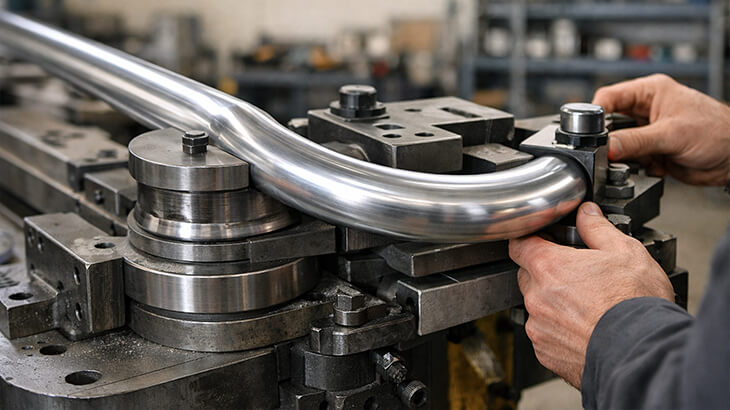
The Art of the Curve: How to Bend Aluminum Tubing Without Kinking

For fabricators, engineers, and DIY enthusiasts across the USA, there are few moments more frustrating than watching a pristine piece of aluminum round tube collapse into a jagged kink during a bend. Whether you are building a custom roll cage, fabricating intake piping for an automotive project, or designing architectural frames, the integrity of your bend matters. A kink isn’t just an aesthetic failure; it restricts flow and compromises structural strength.

At Aluminium Tubes, we understand that starting with high-quality material is only half the battle. The other half is the technique. Here is a comprehensive guide on how to achieve smooth, professional bends without the heartbreak of a kinked tube.

Understanding Why Kinks Happen

To prevent a kink, you have to understand the physics behind it. When you bend a tube, two opposing forces are at work: the outside wall of the tube stretches and thins out, while the inside wall compresses.

Kinking—often referred to as crimping—occurs when the tube folds or collapses inward because the material cannot withstand the compressive force, or the bend radius is too tight for the wall thickness. Essentially, without proper support, the tube takes the path of least resistance and folds rather than curving.

Step 1: Material Selection Matters

Before you even touch a bender, you must ensure you are using the right alloy and temper. Not all aluminum round tube is created equal.

  • Alloy Selection: For projects requiring significant bending, alloys like 3003 and 5052 are often superior choices because they offer higher ductility and workability. While 6061 is a structural standard in the US, it can be more challenging to bend depending on its heat treatment.
  • Temper: The “temper” designation tells you how hard the metal is. 6061-T6 is very hard and strong, making it prone to cracking or kinking during tight bends. For tighter radii, we at Aluminium Tubes often recommend T3 or T4 tempers, or even naturally aged T3, as they are softer and more pliable than T6. If you must use T6, you may need to anneal the bending area to soften it, though this reduces the strength.

Step 2: Know Your Numbers (Wall Factor and Radius)

Feasibility usually comes down to math. Professional benders use a calculation called the “Wall Factor” (Tube Outside Diameter ÷ Wall Thickness) and the “D of Bend” (Centerline Radius ÷ Tube OD).

Generally, the thinner the wall relative to the diameter, the harder it is to bend without support. A thin-walled tube (High Wall Factor) is highly susceptible to collapsing. If you are attempting a tight radius (less than 2 times the tube diameter) on a thin-walled tube, you cannot rely on simple force; you need internal support.

The Professional Solution: Mandrel Bending

If you are wondering how aerospace or performance automotive shops get those perfect, tight bends, the answer is usually a mandrel.

A mandrel is a tool inserted inside the tube during the bending process. Its job is to support the interior walls to prevent them from collapsing or wrinkling while the die forms the curve. For standard bends, a plug mandrel might suffice, but for high-precision or thin-walled aluminum round tube, a flexible ball mandrel is often required. This tool consists of linked ball segments that flex inside the bend, providing continuous support throughout the radius.

Using a mandrel significantly reduces the risk of flattening (ovality) and kinking, ensuring the tube maintains its round cross-section.

The DIY Solution: The Sand Packing Method

Not everyone has access to a CNC mandrel bender. If you are working from a home shop with a manual bender, you can still achieve kink-free results by creating a “poor man’s mandrel” using sand.

Here is the process:

  1. Cap one end: Securely seal one side of your aluminum tube.
  2. Fill with sand: Use fine, dry sand. It is crucial to eliminate air gaps. Tap the tube vibrationally as you fill it to ensure the sand settles tightly.
  3. Cap the other end: Seal the tube tightly so the sand is compressed inside.
  4. Bend: As you bend the tube, the sand acts as a non-compressible core, distributing the pressure evenly and supporting the inner walls against collapse.

This method is time-tested and effective for preventing kinks and flattening in thin-walled tubes when professional tooling isn’t available.

Troubleshooting Common Issues

Even with the right tools, things can go wrong. Here are quick fixes for common issues:

  • Wrinkling on the inside radius: This often means the wiper die (a tool used to smooth the inside of the bend) isn’t set correctly, or your clamping pressure is too loose.
  • Tube Slippage: If the tube slips in the clamp die, you may get kinks. Ensure your tooling is clean and consider increasing clamping pressure.
  • Lubrication: Never bend dry. Friction is the enemy. Use a proper lubricant to reduce drag between the tube and the tooling. For aluminum, heavy-duty lubricants are often necessary to prevent galling (metal pickup) on the tools.

Partnering with Aluminium Tubes

Whether you are using a rotary draw bender with a wiper die and mandrel, or packing sand for a one-off prototype, the quality of your finished product starts with the quality of your tube.

At Aluminium Tubes, we supply premium grade aluminum round tube tailored to the US market. We can help you select the correct wall thickness and temper to ensure your project succeeds—straight or curved. Don’t let poor-quality metal be the reason your project kinks.

Ready to start your next fabrication project? Browse our inventory today and find the material that bends to your will, not the other way around.
Navigating the Waters: A Guide to Understanding Marine Grade Aluminum

For boat builders, marine engineers, and coastal property owners, the battle against the elements is constant. Saltwater is notoriously unforgiving, capable of corroding standard metals in a fraction of their expected lifespan. This is where the right material makes all the difference. At Aluminium Tubes, we understand that selecting the correct alloy isn’t just about durability—it is about safety, efficiency, and longevity.

Whether you are retrofitting a sailboat mast, designing a new hull, or sourcing piping for an offshore rig, understanding “marine grade” is essential. This guide explores why specific aluminum alloys rule the waves and how to choose the right one for your project.

What Exactly is Marine Grade Aluminum?

While pure aluminum naturally offers a level of protection, it is generally too soft for structural applications. To create “marine grade” metal, aluminum is alloyed—mixed with other elements like magnesium or silicon—to enhance its strength and durability while maintaining its ability to withstand harsh environments.

The term “marine grade” generally refers to alloys that belong to the 5xxx and 6xxx series. These materials are celebrated for their high strength-to-weight ratio; in fact, an aluminum hull can be 40% to 50% lighter than a steel equivalent, leading to shallow draughts and lower fuel consumption.

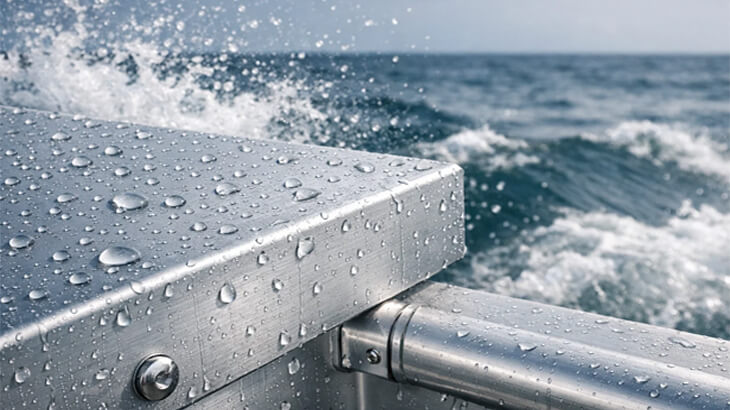
Most importantly, these alloys are categorized as corrosion resistant aluminium. Unlike steel, which requires constant painting to prevent rust, marine grade aluminum spontaneously forms a thin, impervious oxide layer that shields the metal from further oxidation. This natural self-healing mechanism is what makes it the material of choice for everything from pleasure boat superstructures to merchant ships.

The Heavy Hitters: 5xxx vs. 6xxx Series

When browsing our inventory at Aluminium Tubes, you will likely encounter these two dominant families of alloys. Understanding the difference is key to your project’s success.

The 5xxx Series: The Hull and Plate Specialists

The 5xxx series is alloyed primarily with magnesium. These are non-heat treatable alloys known for their excellent resistance to seawater and industrial chemicals.

  • 5083: Often considered the industry standard for shipbuilding, 5083 is the strongest of the non-heat treatable alloys. It retains exceptional strength after welding and is commonly used for ship hulls, pressure vessels, and drilling rigs,. It is so robust that it is even used in cryogenic applications and vehicle armor.
  • 5086: Slightly more formable than 5083, this alloy is excellent for applications where the metal needs to be cold-worked into shape. It is a versatile choice for small boat hulls and gangways.
  • 5052: While it has lower strength compared to 5083, 5052 offers superior formability. It is often used for fuel lines, tanks, and smaller vessels where complex shapes are required.

The 6xxx Series: The Structural and Piping Experts

For our customers at Aluminium Tubes, the 6xxx series is often of particular interest because these alloys are easily extruded into complex shapes, including tubes, bars, and profiles.

  • 6061 and 6082: These are silicon and magnesium alloys. While 5083 is the go-to for plating, 6082 is the standard for extrusions (like the tubing used in railings, masts, and frames),. It is a high-strength alloy suitable for highly loaded structural applications, such as scaffolding elements and offshore construction.

Defending Against the Elements: Corrosion and Maintenance

Even high-quality corrosion resistant aluminium requires proper care to maximize its lifespan. While the metal’s oxide layer offers superb protection, marine environments present unique challenges like galvanic corrosion.

The Danger of Galvanic Corrosion

This occurs when aluminum is electrically connected to a different metal (like a stainless steel propeller shaft) while submerged in an electrolyte (seawater). The aluminum can act as an anode and corrode to protect the other metal.

To prevent this:

  1. Isolate Metals: Use insulating washers, plastic spacers, or sealing wax to break the contact between aluminum tubes and steel bolts.
  2. Use Anodes: Sacrificial anodes made of zinc or aluminum (for saltwater) are essential. They “sacrifice” themselves to corrosion, sparing your aluminum hull or structure. Note: Magnesium anodes should generally be reserved for fresh water, as they can cause damage in saltwater environments.

Painting and Coatings

While marine grade aluminum technically does not require paint for protection, many owners choose to paint for aesthetics or antifouling. Preparation is critical. The surface must be meticulously cleaned and sanded to remove old oxidation, followed by the application of an epoxy primer to ensure a strong bond.

Why Choose Aluminium Tubes?

Navigating the specifications of marine alloys can be complex. For instance, did you know that while 5083 is stronger, 6082 has a finer grain structure that makes it excellent for resisting dynamic loading conditions?

At Aluminium Tubes, we specialize in providing top-tier aluminum products that meet the rigorous demands of the American marine industry. Whether you need 6082 structural tubing for a new T-top frame or 5083 plate for a hull repair, we ensure you get the specific grade required for safety and performance.

Key Takeaways for Your Next Project:

  • Weight Matters: Switching to aluminum can save up to 50% in structural weight compared to steel.
  • Match the Alloy to the Job: Use 5083/5086 for plates and hulls; choose 6082/6061 for tubes and extrusions.
  • Watch Your Connections: Always insulate aluminum from other metals to prevent galvanic corrosion.

Ready to start your project? Contact Aluminium Tubes today to discuss your requirements. We are here to help you build lighter, stronger, and smarter.

How Aluminum Is Produced: Step-by-Step Guide

How Aluminum Is Produced: Step-by-Step Guide

For many of us in the United States, aluminum is a part of daily life. It’s in the vehicles we drive, the buildings we work in, and the devices we use to communicate. But have you ever stopped to consider the journey this metal takes before it becomes a finished product?

At Aluminium Tubes, we believe that understanding the materials you use is the first step to successful fabrication and construction. Whether you are an engineer, a contractor, or a DIY enthusiast, knowing the supply chain ensures you are selecting the right grade and quality for your project.

Here is a deep dive into the fascinating world of aluminum production, from the red earth of the tropics to the high-tech extrusion lines that create our products.

Step 1: Mining the Raw Material

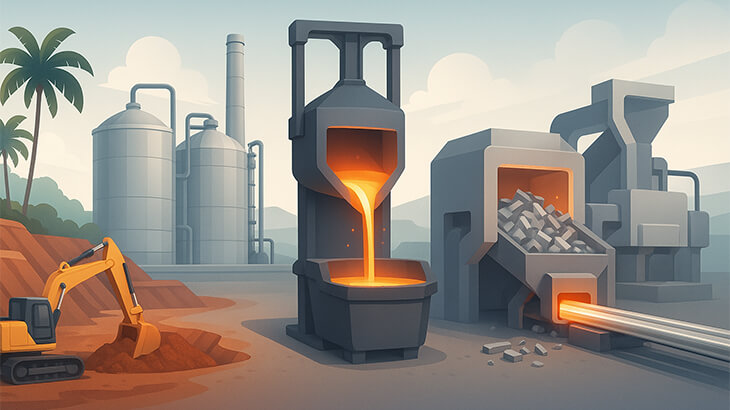
The lifecycle of every aluminum tube begins with bauxite. Bauxite is a reddish clay ore found primarily in the topsoil of tropical and subtropical regions. It is one of the most abundant elements in the Earth’s crust, containing 30–60% aluminum oxide.

While the US produces some bauxite, the vast majority of the world’s reserves are found in countries like Guinea, Australia, Brazil, and Vietnam. The ore is mined, crushed, and washed to remove clay and silica before being transported to refineries.

Step 2: The Bayer Process (Refining)

Once mined, the bauxite must be transformed into alumina (aluminum oxide). This is achieved through a chemical procedure known as the Bayer process, developed in the late 19th century.

  1. Digestion: The crushed bauxite is mixed with a hot solution of caustic soda (sodium hydroxide) and heated under pressure. This dissolves the aluminum oxide while leaving impurities behind.
  2. Clarification: The mixture is filtered. The undissolved impurities, known as “red mud” or bauxite residue, are separated from the liquid sodium aluminate.
  3. Precipitation: The liquid is cooled and seeded with crystals, causing the aluminum to precipitate out of the solution as solid sugar-like crystals called alumina tri-hydrate.
  4. Calcination: Finally, these crystals are heated at temperatures exceeding 2,000°F (approx 1,100°C) to remove water content.

The result is a fine, white powder: pure alumina. It takes roughly two pounds of alumina to produce a single pound of aluminum metal.

Step 3: The Hall-Héroult Process (Smelting)

Turning that white powder into molten metal requires massive amounts of energy. This stage, known as primary aluminium production, utilizes the Hall-Héroult process.

The alumina is dissolved in a bath of molten cryolite (a salt) within a large steel pot lined with carbon. A powerful electric current is passed through the mixture via carbon anodes. This current breaks the chemical bond between the aluminum and the oxygen. The oxygen reacts with the carbon anode to create carbon dioxide, while pure liquid aluminum sinks to the bottom of the pot.

The molten metal is siphoned off and cast into various forms, such as ingots for rolling or billets for extrusion.

Step 4: The Rise of Secondary Aluminum (Recycling)

While the primary smelting process is energy-intensive, aluminum has a distinct advantage: it is 100% recyclable without any loss of properties. This is where secondary aluminum production comes into play, a sector that is vital to the US manufacturing landscape.

Secondary production involves melting down scrap aluminum—from used beverage cans to old window frames—rather than extracting it from ore. The difference in energy consumption is staggering. Producing secondary aluminum requires 95% less energy than primary production.

Increasing aluminum recycling rates by just 10% can decrease processing gas emissions by up to 15%. Because the metal retains its performance characteristics, the recycled material can be reformed into high-performance products again and again.

Step 5: Fabrication and Extrusion

Once the aluminum is cast into billets (logs of aluminum), it is ready for fabrication. This is the stage where Aluminium Tubes steps in to provide value to our customers.

One of the most common methods for creating tubes is extrusion. Imagine squeezing toothpaste out of a tube; aluminum extrusion works on a similar principle. The aluminum billet is heated until it is malleable (soft but not liquid) and forced through a steel die with a specific cross-sectional profile.

This process allows for the creation of complex shapes, including round, square, and rectangular tubes, with precise tolerances. The resulting products offer an exceptional strength-to-weight ratio and natural corrosion resistance, making them ideal for aerospace, construction, and industrial machinery.

The Future of Aluminum

The industry is currently undergoing a revolution to become greener. Innovations are rolling out globally to reduce the carbon footprint of primary aluminium production. For example, new “inert anode” technology is being developed to release oxygen instead of carbon dioxide during smelting. Furthermore, manufacturers are increasingly integrating hydrogen power and solar energy into the refining process to move toward Net Zero emissions.

Why Choose Aluminium Tubes?

Understanding the complexity of the manufacturing process highlights why quality control matters. From the purity of the alloy during smelting to the precision of the die during extrusion, every step affects the final strength and finish of the product.

At Aluminium Tubes, we are dedicated to sourcing materials that meet the highest standards of production and sustainability. Whether you need materials for a high-stress structural framework or a custom design project, we ensure that the metal you receive has been crafted for performance.

Ready to start your next project? Browse our extensive inventory or contact our team today to find the perfect profile for your needs. Let us help you build with the strength and versatility of aluminum.