
-
Address: 2, Reading Road,
Edison New Jersey, USA -
Address: 2, Reading Road,
Edison New Jersey, USA
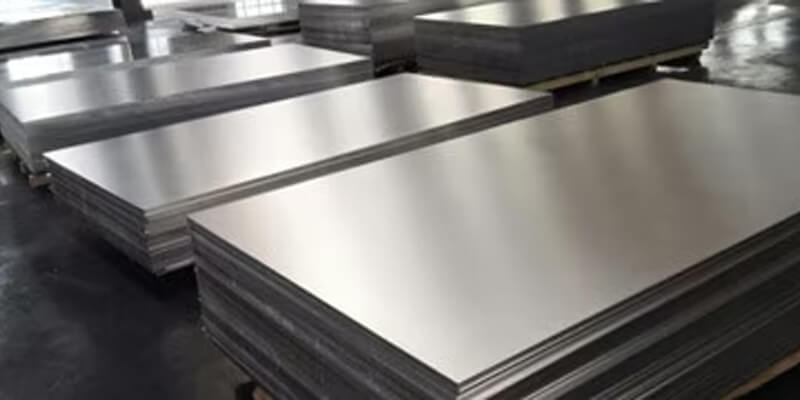
Aluminium Plate 3003 is a widely used aluminum alloy from the 3000 series. It is mainly alloyed with manganese, which improves its strength compared to pure aluminum. This alloy is known for its excellent corrosion resistance, good workability, and smooth finish.
Aluminium Plate 3003 is not heat-treatable. Instead, it gains strength through cold working processes. It is considered a general-purpose alloy and is commonly used in applications where moderate strength and high formability are required.
Aluminium Plate 3003 is a popular choice because it offers a great balance of affordability, corrosion resistance, and ease of fabrication. It is stronger than pure aluminum (1100) but still very easy to form and shape.
Compared to high-strength alloys like 6061 or 7075, Aluminium Plate 3003 is softer. However, it is much easier to bend, roll, and deep draw. This makes it ideal for applications where complex shapes are needed.
It is also highly resistant to corrosion, especially in humid and outdoor environments. This makes it suitable for long-term use with minimal maintenance.
Aluminium Plate 3003 offers several useful properties that make it suitable for many applications.
These properties make Aluminium Plate 3003 a reliable choice for both industrial and decorative uses.
Aluminium Plate 3003 is available in a wide range of sizes to meet different project needs.
Custom sizes can be produced based on requirements. The material follows international standards such as ASTM and EN for thickness and flatness tolerances. Precision cutting ensures accurate dimensions for various applications.
Due to its versatility, Aluminium Plate 3003 is used in many industries.
Its corrosion resistance and formability make it ideal for both indoor and outdoor applications.
Aluminium Plate 3003 is a non-heat-treatable alloy. This means it does not gain strength through heat treatment like 6061 or 6082.
Instead, its strength is improved through cold working processes such as rolling or pressing. These processes change the internal structure of the metal, making it stronger.
Because it does not require heat treatment, Aluminium Plate 3003 is easier and more cost-effective to produce and process.
There are many benefits of using Aluminium Plate 3003.
These advantages make it a practical choice for both industrial and commercial use.
When comparing Aluminium Plate 3003 with other alloys, the differences are clear.
Aluminium Plate 3003 is best suited for applications that require flexibility, corrosion resistance, and cost efficiency.
Aluminium Plate 3003 is very easy to machine and fabricate due to its softness and workability.
For machining:
For fabrication:
Its flexibility makes it ideal for projects that require complex designs.
Aluminium Plate 3003 can be finished in different ways to improve its appearance and performance.
Common finishes include:
Customization options include cutting, bending, drilling, and coating. These options allow manufacturers to meet specific design and functional requirements.
The price of Aluminium Plate 3003 depends on several factors.
Bulk orders often reduce the cost per unit. Since it is not heat-treated, Aluminium Plate 3003 is generally more affordable than many high-strength alloys.
Aluminium Plate 3003 is a versatile and cost-effective aluminum alloy. It offers excellent corrosion resistance, good formability, and reliable performance. It is widely used in construction, food processing, and industrial applications.
If you need a lightweight, easy-to-work material with strong corrosion resistance, Aluminium Plate 3003 is an excellent choice for your project.
=======================
Aluminium Plate 3003 is used in roofing, cladding, cooking equipment, storage tanks, HVAC systems, and chemical equipment due to its corrosion resistance and formability.
Aluminium Plate 3003 has moderate strength. It is stronger than pure aluminum but softer than alloys like 6061. It is ideal for applications that require flexibility.
Yes, Aluminium Plate 3003 can be easily welded using standard welding methods such as MIG and TIG welding.
No, Aluminium Plate 3003 does not rust. It has excellent corrosion resistance, making it suitable for outdoor and humid environments.
Aluminium 5052 is stronger and more durable, while Aluminium Plate 3003 is more formable and cost-effective.
No, Aluminium Plate 3003 is not heat-treatable. Its strength is increased through cold working processes.
The price depends on thickness, size, market demand, raw material cost, and customization requirements.
+91 95166 18000
support@aluminiumtubes.org