
-
Address: 2, Reading Road,
Edison New Jersey, USA -
Address: 2, Reading Road,
Edison New Jersey, USA
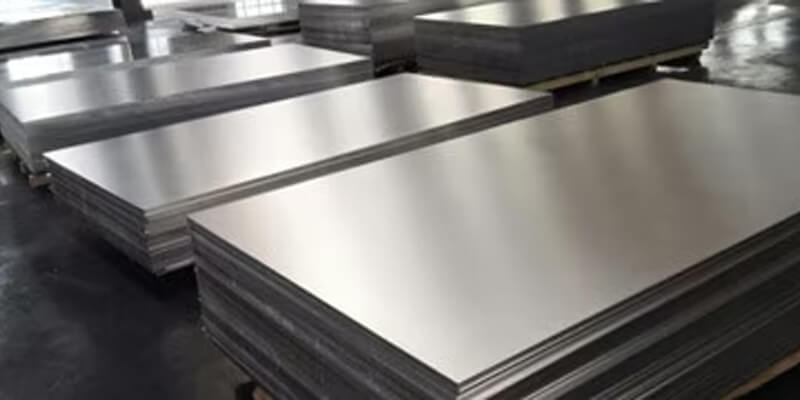
Aluminium Plate 6061 T6 is a heat-treated aluminum alloy known for its high strength, lightweight structure, and excellent corrosion resistance. It belongs to the 6000 series of aluminum alloys, which are primarily composed of magnesium and silicon. These elements give the alloy its strong mechanical properties and good formability.
The “T6” temper indicates that the material has undergone a solution heat treatment followed by artificial aging. This process enhances its hardness and tensile strength. Because of this, Aluminium Plate 6061 T6 is widely used in structural and engineering applications where durability and performance are critical.
It is considered a general-purpose alloy. It performs well in both indoor and outdoor environments. It is also easy to machine, weld, and fabricate, making it a preferred choice across industries.
When selecting aluminum materials, performance, cost, and usability matter. Aluminium Plate 6061 T6 offers a balanced combination of all three.
Unlike softer grades like 1100 or 3003, it provides much higher strength. Compared to 5052, it is stronger and more suitable for structural applications. While 7075 is stronger, it is more expensive and harder to weld. This makes 6061 a practical and cost-effective option.
Another reason to choose Aluminium Plate 6061 T6 is its versatility. It works well in a wide range of applications, from heavy machinery to precision components. It also offers better corrosion resistance than many high-strength alloys, which increases product lifespan and reduces maintenance costs.
Aluminium Plate 6061 T6 is valued for its excellent mechanical and physical properties.
It has a high strength-to-weight ratio. This means it is strong but still lightweight. This is important in industries like aerospace and automotive, where reducing weight improves performance.
It offers excellent corrosion resistance. It can withstand moisture, chemicals, and environmental exposure without significant damage. This makes it ideal for outdoor and marine applications.
It also has good thermal and electrical conductivity. This allows it to be used in heat exchangers and electrical enclosures.
In addition, Aluminium Plate 6061 T6 is easy to machine. It produces clean cuts and smooth finishes. It also supports welding processes like TIG and MIG, which makes fabrication simple and efficient.
Aluminium Plate 6061 T6 is available in a wide variety of sizes to meet different industrial needs.
Typical thickness ranges from 6 mm to over 200 mm. Standard widths include 1000 mm, 1250 mm, and 1500 mm. Lengths usually range from 2000 mm to 3000 mm. However, custom sizes can be manufactured based on specific project requirements.
Precision is important in engineering applications. That is why Aluminium Plate 6061 T6 is produced with tight tolerances. Thickness, flatness, and dimensional accuracy follow international standards such as ASTM B209 and EN standards.
Custom cutting, CNC machining, and finishing services are often available. This helps reduce material waste and speeds up production.
Aluminium Plate 6061 T6 is widely used across many industries due to its versatility and performance.
In the aerospace industry, it is used for aircraft structures, wings, and fuselage components. Its lightweight nature helps improve fuel efficiency.
In the automotive sector, it is used for frames, panels, and structural parts. It helps reduce vehicle weight while maintaining strength.
In marine applications, it is used for boat hulls, decks, and fittings. Its corrosion resistance makes it ideal for saltwater environments.
In construction, it is used for structural frameworks, bridges, and platforms. It provides long-lasting durability.
It is also used in manufacturing, electronics, and defense industries for machinery, enclosures, and precision components.
The strength of Aluminium Plate 6061 T6 comes from its heat treatment process.
First, the material is heated to a high temperature. This step is called solution heat treatment. It allows the alloying elements to dissolve into the aluminum matrix.
Next, the plate is rapidly cooled. This process is known as quenching. It locks the elements in place.
Finally, the material undergoes artificial aging. During this stage, the alloy develops fine particles that increase strength and hardness.
This three-step process results in a material that is strong, stable, and reliable. That is why Aluminium Plate 6061 T6 performs better than untreated aluminum.
There are many reasons why industries prefer Aluminium Plate 6061 T6.
It is lightweight, which makes handling and transportation easier. It is strong enough for structural use. It also resists corrosion, which reduces maintenance costs.
It is easy to machine and fabricate. This reduces production time and improves efficiency. It also supports various finishing options, which enhances appearance and performance.
Another advantage is cost-effectiveness. While it offers high performance, it is more affordable than many high-strength alloys. This makes Aluminium Plate 6061 T6 a smart investment for long-term use.
Understanding how Aluminium Plate 6061 T6 compares to other alloys helps in material selection.
6061 vs 5052: 5052 has better corrosion resistance but lower strength. 6061 is better for structural applications.
6061 vs 7075: 7075 is stronger but more expensive and difficult to weld. 6061 offers a better balance of strength and workability.
6061 vs 2024: 2024 has high strength but poor corrosion resistance. 6061 is more durable in harsh environments.
Overall, Aluminium Plate 6061 T6 is considered a general-purpose alloy because it performs well in most conditions.
Aluminium Plate 6061 T6 is known for its excellent machinability.
It can be easily cut, drilled, and milled using standard tools. Using sharp tools and proper cutting speeds ensures clean results. Lubrication helps reduce heat and improves tool life.
It is also suitable for CNC machining. This allows for precise and complex designs.
In terms of fabrication, it supports welding methods like TIG and MIG. It can also be bent and formed with proper techniques.
Because of its stability, Aluminium Plate 6061 T6 maintains its shape during machining. This reduces errors and improves accuracy.
Aluminium Plate 6061 T6 offers a wide range of surface finishes and customization options.
Mill finish is the natural surface of the plate. It is suitable for industrial use.
Anodizing improves corrosion resistance and adds a decorative finish. It is commonly used in architectural and consumer products.
Polishing creates a smooth and shiny surface. Brushed finishes provide a textured look.
Customization options include cutting, drilling, CNC machining, bending, and coating. These services allow manufacturers to meet exact design requirements.
The cost of Aluminium Plate 6061 T6 depends on several factors.
Thickness and size play a major role. Larger and thicker plates cost more. Market conditions also affect pricing. Aluminum prices fluctuate based on supply and demand.
Processing and finishing increase the overall cost. Custom orders may require additional machining or coating.
Order quantity can also impact price. Bulk purchases often reduce the cost per unit.
Despite these factors, Aluminium Plate 6061 T6 remains cost-effective due to its durability and long service life.
Aluminium Plate 6061 T6 is a reliable and versatile material for modern engineering and manufacturing. It combines strength, corrosion resistance, and ease of fabrication. This makes it suitable for a wide range of applications.
If you need a durable and cost-effective aluminum solution, Aluminium Plate 6061 T6 is one of the best choices available today.
=======================
FAQ
Aluminium Plate 6061 T6 is popular because it offers a perfect balance of strength, corrosion resistance, and machinability. It is suitable for both structural and precision applications.
Yes, Aluminium Plate 6061 T6 performs well outdoors. It resists corrosion from moisture and environmental exposure, making it ideal for long-term use.
Industries such as aerospace, automotive, marine, construction, and manufacturing widely use Aluminium Plate 6061 T6 for structural and high-performance applications.
Aluminium Plate 6061 T6 is lighter than steel but offers high strength. While steel is stronger, 6061 provides a better strength-to-weight ratio, which is critical in many industries.
Yes, it can be cut, machined, drilled, welded, and finished based on specific requirements. Custom sizes and shapes are commonly available.
No, aluminum does not rust like steel. Aluminium Plate 6061 T6 forms a protective oxide layer that prevents corrosion.
The main difference is thickness. Plates are thicker than sheets. Aluminium Plate 6061 T6 is used for heavy-duty and structural applications.
Yes, it has excellent machinability. It produces clean cuts and is widely used in CNC machining.
Common finishes include mill finish, anodized, brushed, and polished. These improve both appearance and performance.
Thickness depends on the application. Structural uses require thicker plates, while lightweight applications use thinner ones.
+91 95166 18000
support@aluminiumtubes.org