-
Address: 2, Reading Road,
Edison New Jersey, USA -
Address: 2, Reading Road,
Edison New Jersey, USA
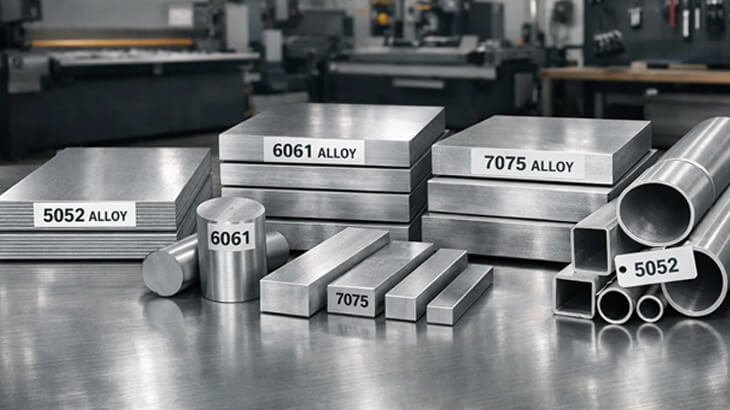
When you look at a high-performance bicycle frame, a sturdy window casing, or the wing of an aircraft, you are looking at aluminum. However, you are rarely looking at pure aluminum. While aluminum is the predominant metal in these materials, the secret to their performance lies in the “recipe”—the specific blend of elements that creates an alloy.
At Aluminium Tubes, we believe that choosing the right material starts with understanding what goes into it. A common question we hear from our US customers is: “Which alloy is composed mainly of aluminum?”
The technical answer is: All of them.
By definition, an aluminum alloy is a mixture where aluminum is the predominant metal. However, the percentage of aluminum and the specific “spice” added—whether it be copper, magnesium, silicon, or zinc—changes the metal’s personality entirely.
If you are in the market for an aluminium alloy tube for your next project, understanding these series designations is critical. Here is a guide to the most common alloys we encounter and what makes them unique.
If you are looking for an alloy that is almost entirely aluminum, the 1000 series is the answer. Alloys like 1100 or 1050 are essentially pure aluminum, containing a minimum of 99% aluminum by weight.
For most tubing applications—from architectural railings to structural frames—the 6000 series is the industry standard. These alloys use Magnesium and Silicon as their primary alloying elements. They are heat-treatable, meaning they can be hardened to levels comparable to some steels.
Two specific alloys dominate this category, and at Aluminium Tubes, we help clients decide between them daily:
When strength is the only thing that matters, we look to the aerospace grades. These are essentially high-performance machines in metal form.
The 2000 Series (Copper) Alloys like 2024 utilize copper as the main ingredient. This results in high strength and excellent fatigue resistance, which is why it is often found in aircraft structures under tension. However, the copper content makes it less corrosion-resistant than the 6000 series, often requiring a protective coating (cladding).
The 7000 Series (Zinc) This is the strongest class of aluminum. 7075 is the superstar here, utilizing zinc to achieve strength comparable to many steels. It is used in highly stressed parts like wing spars and bicycle gears. The trade-off? It is much more difficult to weld and fabricate than the friendly 6061.
If your project involves saltwater, you need the 5000 series, specifically 5052. The primary alloying element here is Magnesium.
Unlike the 6000 series, 5052 cannot be heat-treated to gain strength; instead, it is hardened through cold working (strain hardening). It offers the highest strength of the non-heat-treatable grades and is virtually immune to saltwater corrosion, making it the go-to for fuel lines, tanks, and marine hardware.
Choosing the right alloy is only half the battle; how the tube is formed matters, too.
Navigating the alphabet soup of chemical compositions—from Magnesium-Silicon blends in 6061 to the Copper-heavy 2024—can be complex. Yet, choosing the correct aluminium alloy tube is the difference between a project that lasts a lifetime and one that fails under stress.
At Aluminium Tubes, we don’t just sell metal; we provide solutions for the American market. Whether you require the pristine finish of 6063 for an architectural project or the rugged durability of 6061 for a structural framework, we ensure you get the exact specifications required.
We stock a wide variety of grades and tempers to meet rigorous US standards. Do not leave your material selection to chance. Contact Aluminium Tubes today, and let us help you select the perfect alloy for your application.
+91 95166 18000
support@aluminiumtubes.org