-
Address: 2, Reading Road,
Edison New Jersey, USA -
Address: 2, Reading Road,
Edison New Jersey, USA
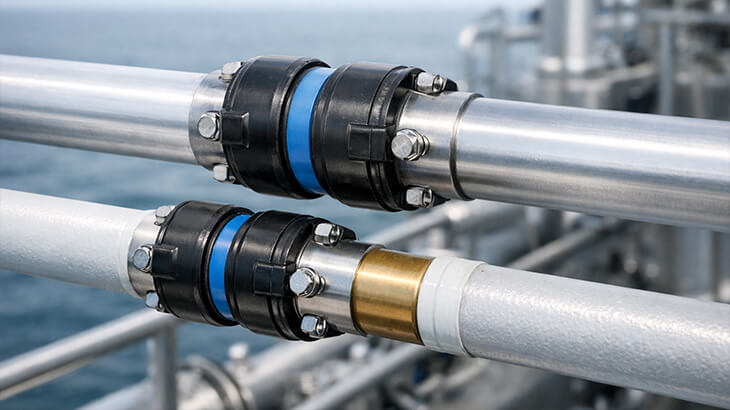
Aluminum is a miracle metal for modern construction and manufacturing. It is lightweight, strong, and naturally resistant to atmospheric corrosion. However, for builders and engineers across the USA, aluminum has one significant “Achilles’ heel”: it does not play well with others. When you connect aluminum tubes to metals like carbon steel or stainless steel, you risk triggering a chemical reaction known as galvanic corrosion.
At Aluminium Tubes, we believe in not only supplying the highest quality materials but also ensuring they last a lifetime in your projects. Whether you are building marine structures, industrial frameworks, or custom automotive parts, understanding how to manage dissimilar metals is critical. This guide provides a practical checklist for galvanic corrosion prevention aluminum users need to know.
Before diving into the solution, it helps to understand the problem. Galvanic corrosion occurs when two different metals are in electrical contact while submerged in or wetted by an electrolyte (like saltwater, condensation, or even rainwater).
Think of it as a battery. One metal acts as the anode (the active metal) and the other as the cathode (the noble metal). In this reaction, electrons flow from the anode to the cathode. Unfortunately for us, aluminum is near the “active” end of the galvanic series, meaning it usually becomes the anode. Consequently, the aluminum sacrifices itself, corroding at an accelerated rate to protect the other metal.
To protect your Aluminium Tubes products, you must know which metals pose the biggest threat. The further apart two metals are on the galvanic series, the higher the voltage potential and the faster the corrosion.
If your design requires joining aluminum to stainless steel or carbon steel, you do not have to abandon the idea. You simply need to break the “battery circuit.” Use this checklist to ensure your joints remain secure and corrosion-free.
The most effective way to stop galvanic corrosion is to prevent the two metals from touching directly.
Painting or powder coating is a common defense, but there is a specific rule you must follow.
Size matters in galvanic corrosion.
Fasteners are the most common failure points.
Without water (the electrolyte), the reaction cannot happen.
Even with the best design, environmental factors change. Regular maintenance is key to longevity, especially in the US coastal or industrial regions where salt and pollution increase conductivity.
Using aluminum in conjunction with other metals opens up a world of structural possibilities, provided you respect the chemistry involved. By isolating connections, choosing the right coatings, and managing moisture, you can ensure your projects stand the test of time.
At Aluminium Tubes, we are dedicated to helping our US customers build smarter and stronger. Whether you need high-grade material for a new project or advice on maintaining existing structures, we are here to support your success. Don’t let corrosion eat away at your investment—plan ahead and build with confidence.
+91 95166 18000
support@aluminiumtubes.org