-
Address: 2, Reading Road,
Edison New Jersey, USA -
Address: 2, Reading Road,
Edison New Jersey, USA
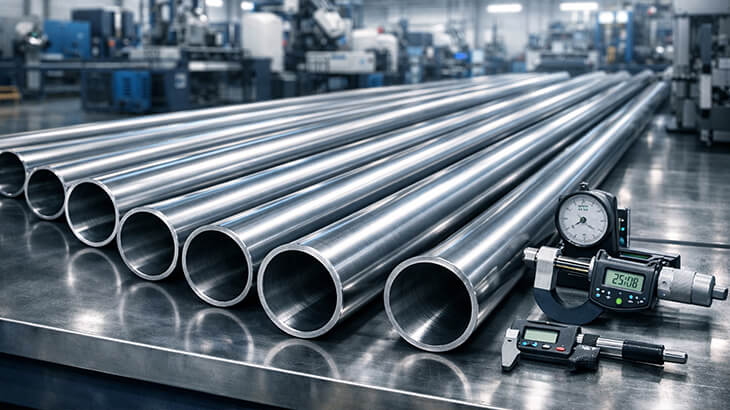
As we move further into the decade, the industrial landscape in the United States is undergoing a significant transformation. For professionals in manufacturing, automotive, and energy sectors, keeping a pulse on material trends is essential for maintaining a competitive edge. One of the most critical indicators of industrial health is the demand for precision piping and tubing.
According to the latest market intelligence, the global Cold Drawn Seamless Steel Pipes market is on a robust upward trajectory. For us at Aluminium Tubes, understanding these market dynamics is crucial not just for steel applications, but for understanding the broader demand for high-precision, cold-finished solutions across all metal types, including our specialty: the drawn aluminium tube.
In this article, we break down the key findings of the 2026 market report, explain the “cold drawn” advantage, and explore how these trends impact your material sourcing decisions.
The data indicates a strong resurgence in industrial demand. The market size for cold drawn seamless steel pipes reached approximately $15.81 billion in 2025 and is projected to grow to $17.25 billion in 2026. Looking further ahead, forecasts suggest the market could reach $24.81 billion by 2030, driven by a Compound Annual Growth Rate (CAGR) of roughly 9.5%.
For our customers in the USA, it is particularly notable that North America is identified as the fastest-growing region in this sector. This growth is fueled by a combination of recovering infrastructure projects, expanded automotive production, and increased activity in the oil and gas sectors.
Why are industries flocking toward cold drawn seamless pipes? The report highlights several key drivers that mirror what we see at Aluminium Tubes every day:
To understand the value of these materials, one must understand the process. Whether working with steel or aluminum, the “cold drawn” method is superior for applications requiring precision.
Cold drawing involves pulling a metal tube (the hollow billet) through a die and over a mandrel at room temperature. This process is distinct from hot finishing because it creates a product with:
While the 2026 report focuses on steel, the principles of cold drawing apply directly to the solutions we provide at Aluminium Tubes.
Steel is the go-to for high-pressure environments, such as boiler tubes and hydraulic cylinders, where handling immense stress is the priority. However, as industries prioritize lightweighting—particularly in aerospace and electric vehicles—the drawn aluminium tube becomes the material of choice.
Here is why discerning engineers often specify a drawn aluminium tube over a seamless extruded alternative:
At Aluminium Tubes, we recognize that the surge in the North American market requires suppliers who can deliver consistency and quality. The market report warns of potential supply chain disruptions and fluctuating raw material costs. This makes choosing a reliable domestic partner more important than ever.
We specialize in navigating these market complexities. Whether you are looking for the extreme pressure resistance of cold drawn steel or the lightweight precision of a drawn aluminium tube, our focus is on delivering materials that meet rigorous ASTM standards. For example, while standard pipes might meet basic ASTM A53 specs, high-performance applications often require the tighter controls found in cold-drawn specifications like ASTM A519 for mechanical tubing.
The trajectory for 2026 is clear: industries are demanding higher quality, tighter tolerances, and better performance from their tubular components. The growth in the cold drawn market reflects a move toward precision engineering across the USA.
Whether your next project requires the heavy-duty resilience of steel or the refined precision of a drawn aluminium tube, quality manufacturing makes the difference between a successful build and a maintenance headache.
At Aluminium Tubes, we are dedicated to helping American businesses ride this wave of industrial growth with the highest quality tubular products available.
Ready to discuss your 2026 project requirements? Contact the team at Aluminium Tubes today for a consultation on your precision tubing needs.
+91 95166 18000
support@aluminiumtubes.org

October 16, 2025