-
Address: 2, Reading Road,
Edison New Jersey, USA -
Address: 2, Reading Road,
Edison New Jersey, USA
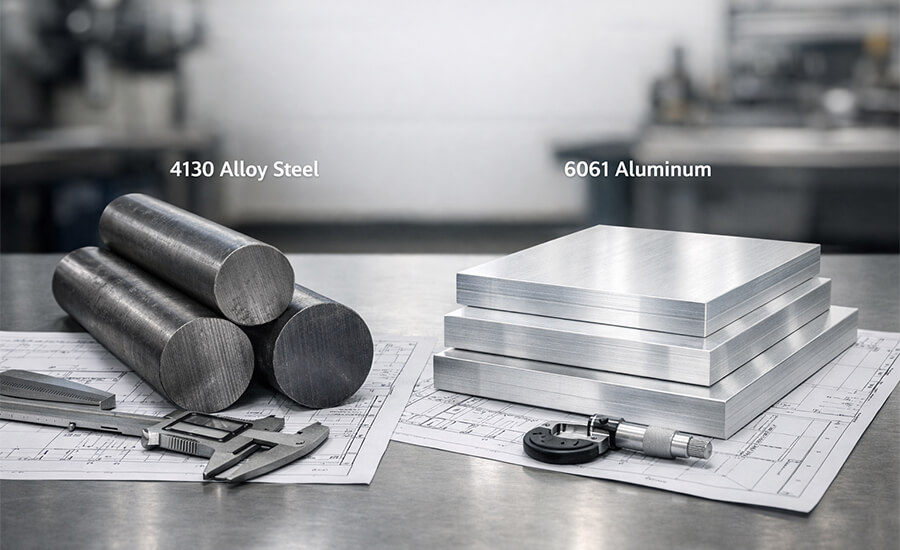
Whether you are building a custom automotive chassis, fabricating lightweight aerospace components, or designing heavy-duty structural frames here in the USA, selecting the right material is a critical decision. Two of the most popular heavy-hitting materials in the fabrication world are 4130 alloy steel (commonly known as chromoly) and 6061 aluminum.
A question our experts at Aluminium Tubes hear frequently from manufacturers and hobbyists alike is: Is 4130 alloy steel less expensive than 6061 aluminum?
The short answer is yes, 4130 alloy steel is typically less expensive than 6061 aluminum when looking strictly at the raw cost per pound. However, for American businesses and DIY fabricators aiming to optimize their budgets, looking only at the base price can be incredibly misleading. Let’s dive deep into the real costs associated with these materials, comparing their physical properties, fabrication expenses, and long-term value to see which metal truly offers the best return on your investment.
When comparing the raw material prices directly, 4130 alloy steel takes the lead as the more budget-friendly option by weight. Market data indicates that 4130 steel can cost around $0.95 per kilogram, whereas 6061-T6 aluminum averages around $2.42 per kilogram. Furthermore, comparative material indexes show that the base metal relative price of 6061 aluminum is roughly 9.5, compared to just 2.4 for 4130 steel.
Based on these numbers alone, purchasing a ton of 4130 steel will demand a significantly lower initial capital outlay than purchasing a ton of 6061 aluminum. If your project has a strict, immediate budget for raw materials and weight is not a restrictive factor, 4130 chromoly is highly attractive.
Here is where the pricing dynamics begin to shift. Metals are usually priced by weight, but they are utilized by volume. This makes the density of the material a crucial factor in your overall project cost.
6061 aluminum boasts a density of just 2.7 g/cm³ (or 2,700 kg/m³), while 4130 steel is a much denser, heavier material at 7.8 g/cm³ (or 7,800 kg/m³). In practical terms, this means that steel is nearly three times heavier than aluminum.
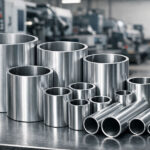
When you order a specific length of tubing—such as our premium Aluminium Round Tubes—you are getting substantially more material volume per pound than you would with steel. While you might pay more for a pound of 6061 aluminum, that single pound will yield significantly more linear footage of tubing than a pound of 4130 steel. When you calculate the cost per foot rather than the cost per pound, the price gap between the two materials narrows dramatically.
The true cost of a material isn’t just what you pay the supplier; it also includes the labor, time, and tooling required to transform it into a finished product. This is an area where 6061 aluminum shines brilliantly.
Aluminum is exceptionally easy to work, machine, file, drill, and sand. Its machinability rating is often evaluated at around 360%, which is drastically higher than standard structural steels that sit closer to 78%. This incredible machinability means that your cutting tools will last much longer, your machining speeds can be significantly faster, and your overall labor costs will drop.
On the other hand, 4130 alloy steel is known for being extremely hard and tough, which makes it much harder to machine. Welding 4130 steel also comes with its own set of challenges. To retain ample strength at welded seams, the tubing may require specific post-weld heat treatments (such as normalizing or quenching and tempering) to prevent the heat-affected zones from becoming a weak link in your structure.
Conversely, 6061 aluminum is heavily favored in modern manufacturing because it is relatively strong and can be easily welded. Whether you are setting up a large-scale manufacturing run or doing custom fabrication, the time and tooling saved by using aluminum can easily offset its higher initial raw material cost.
Finally, when calculating the lifecycle cost of your project, you must consider environmental wear and tear. 4130 alloy steel is susceptible to atmospheric moisture and will rust if left unprotected. To prevent this, steel requires routine maintenance, protective coatings, or painting, which adds to the lifetime cost of the product.
Aluminum provides a massive advantage here. It does not rust. When 6061 aluminum is exposed to an oxygen-rich environment, it naturally builds a protective layer of oxidation that defends the metal from the elements without the need for expensive surface treatments. This makes aluminum highly reliable and virtually maintenance-free
+91 95166 18000
support@aluminiumtubes.org